

The Spring Reckoning, May 2026
Every year the gardens wake up before I do.
The daffodils emerge through dead leaves. The grapevines begin to bud. The grasses left standing through winter fall apart as new growth struggles to break through. The conifers push bright green candles at their tips. And every year, usually sometime in April, I begin the long process of bringing everything back to life.
This year I was late. Florida stretched into May, and when I returned to New York the gardens were already way ahead of me. Weeds had begun their relentless invasion. Dead perennial stalks still stood where winter left them. Mulch had faded to gray. The whole property had a look of neglect.
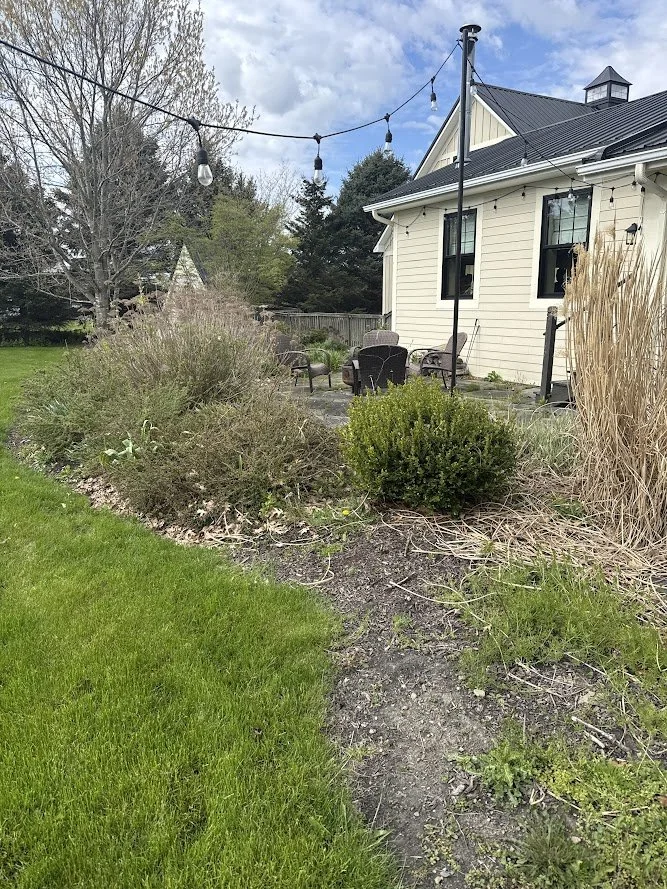
Weedy Neglect
Spring cleanup here is not a weekend project. Its a season.
Every year I order a truckload of mulch. The work begins with cutting back all the dead growth from the previous year. Then the beds must be weeded, edged, cultivated, replanted, and remulched. Anything lost over winter gets replaced. Anything that spread too aggressively gets divided or removed.
And there are many beds.
Along the road that borders the driveway runs a conifer garden nearly 150 feet long. Blues, yellows, deep greens. Low spreading junipers beside upright evergreens. Small burgundy sand cherries scattered through the composition like brushstrokes of dark wine color against the greens.
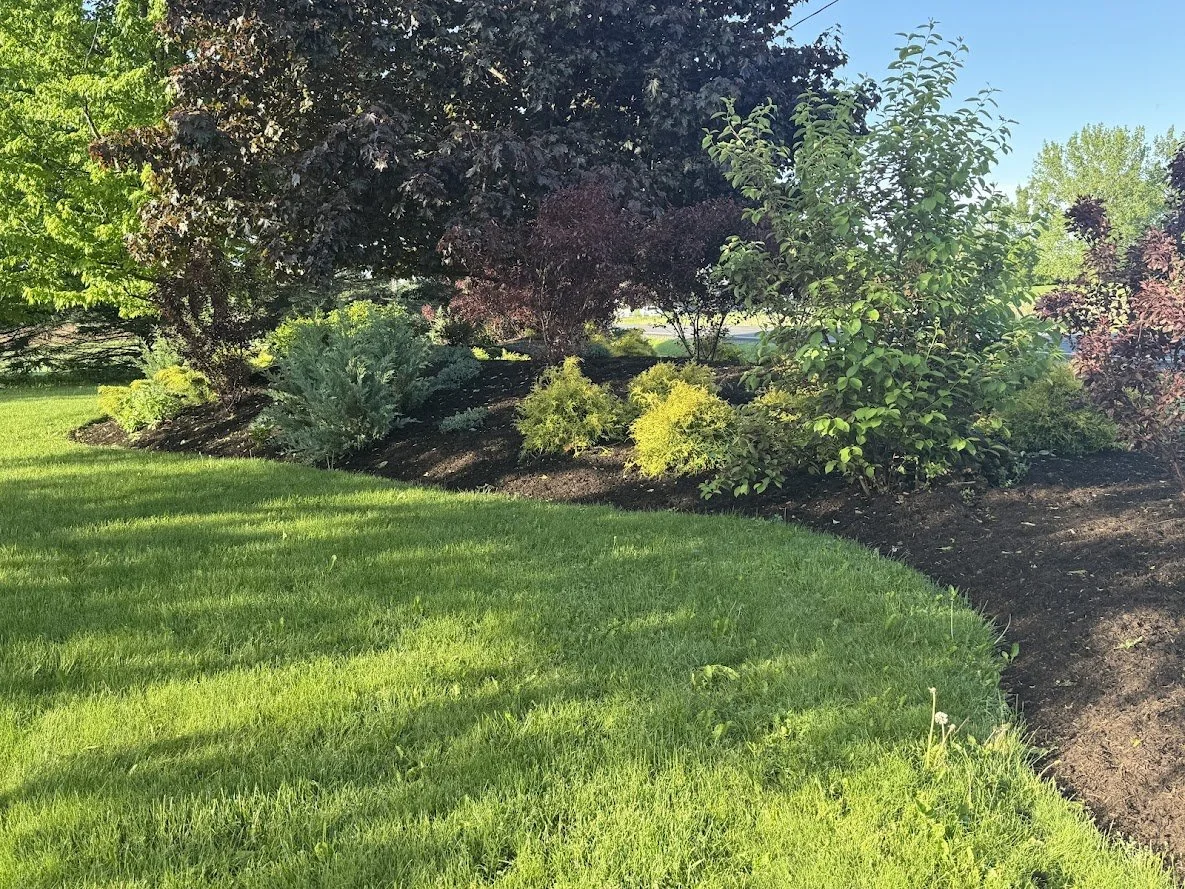
Conifer Garden
Closer to the house sits a raised stone bed with a birdhouse mounted high on a pole at its center. Foundation plantings wrap the front and sides of the house.
In the backyard is the herb garden — the first garden I ever built here. It has gravel paths and beds edged with old logs recycled from the childrens playset. A green picket fence surrounds it, now tattered with age, wrapped in grapevines planted more than fifteen years ago. The fence needs replacing next year, though I love its soulful imperfection.
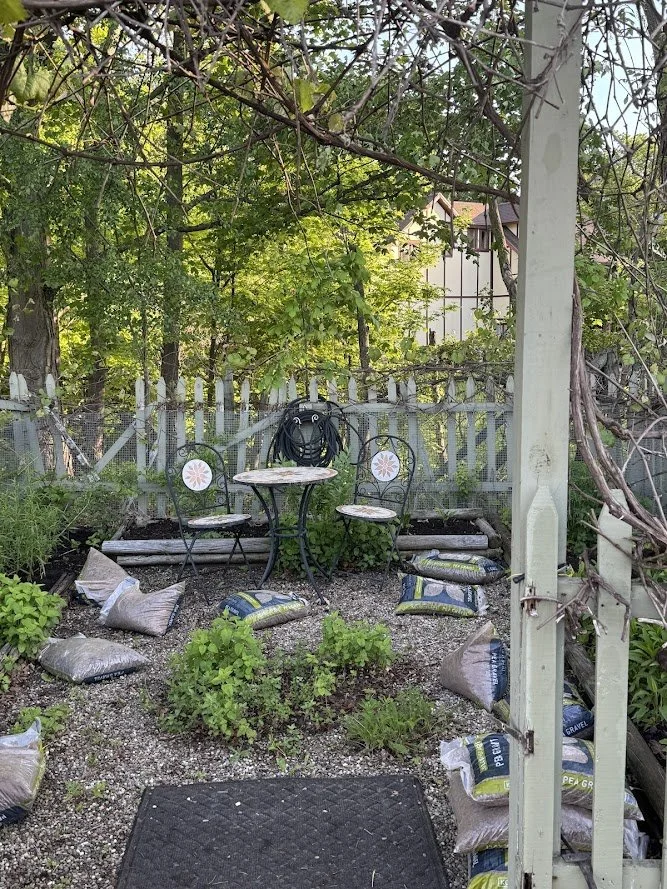
Time to refresh the Gravel
Near the greenhouse are perennial borders full of butterfly bush, grasses, and flowers meant to carry movement and color through summer. In winter, the tall feathered grasses become sculptures - ladies dancing in the snow and wind. The pool is surrounded by young boxwoods that I hope someday will merge into a continuous clipped wave of green.
Beyond the pool sits the flagstone firepit patio ringed with hydrangea, daisies, sedum, daylilies, ornamental grasses, snow-in-summer, and sweet woodruff spilling over the edges.
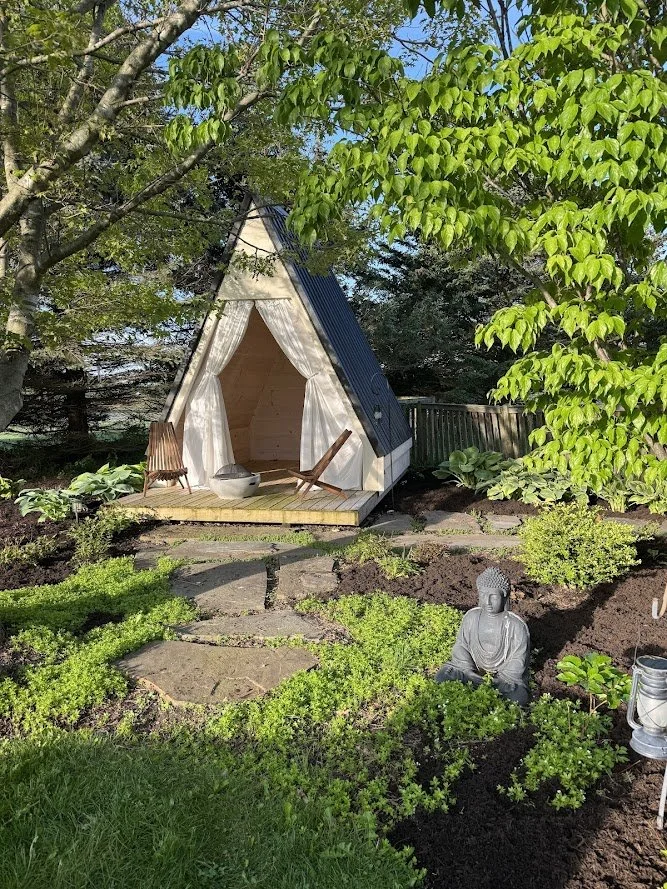
Farther south, a flagstone path leads to the peace cabin through beds of peonies, hosta, astilbe, and groundcover. Two azaleas planted there two years ago died this winter and will need to be replaced.
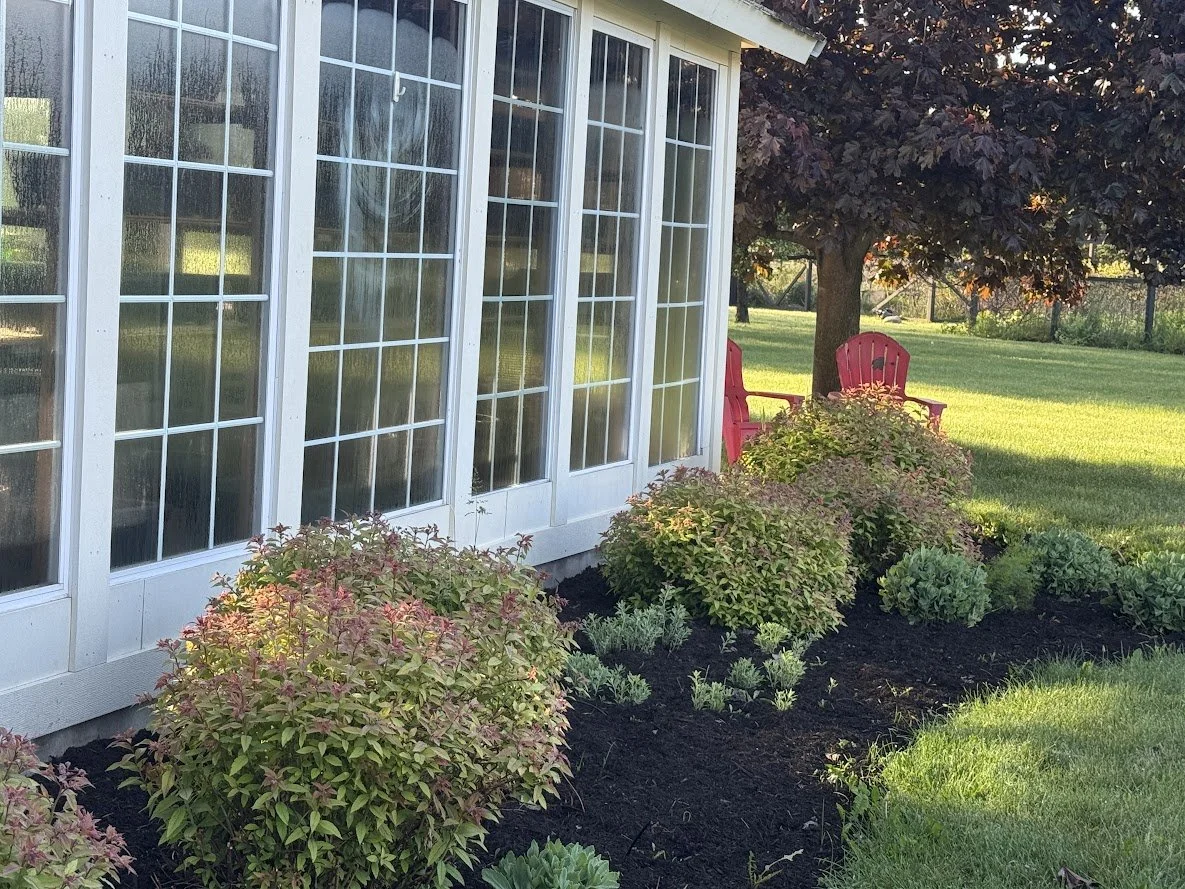
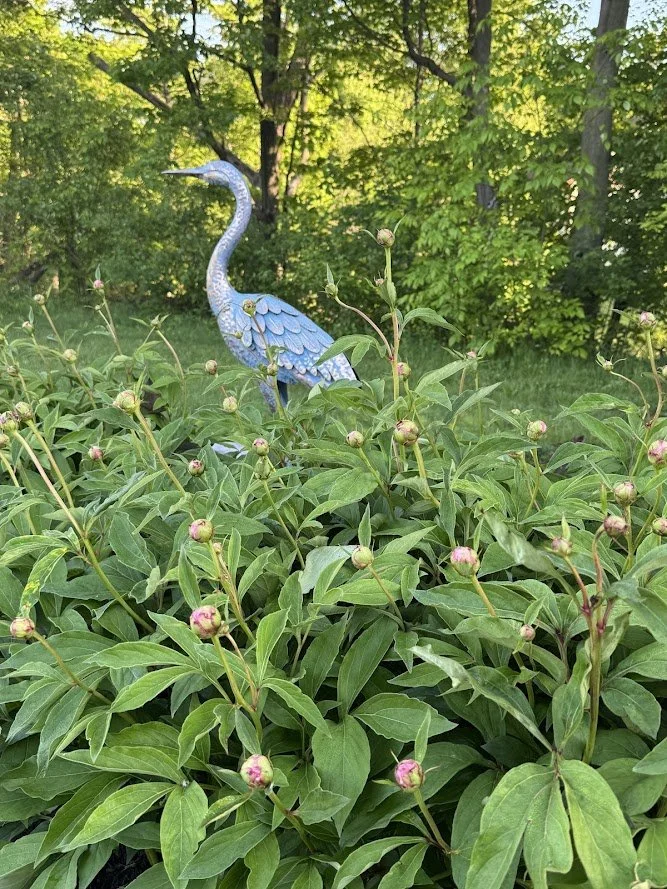
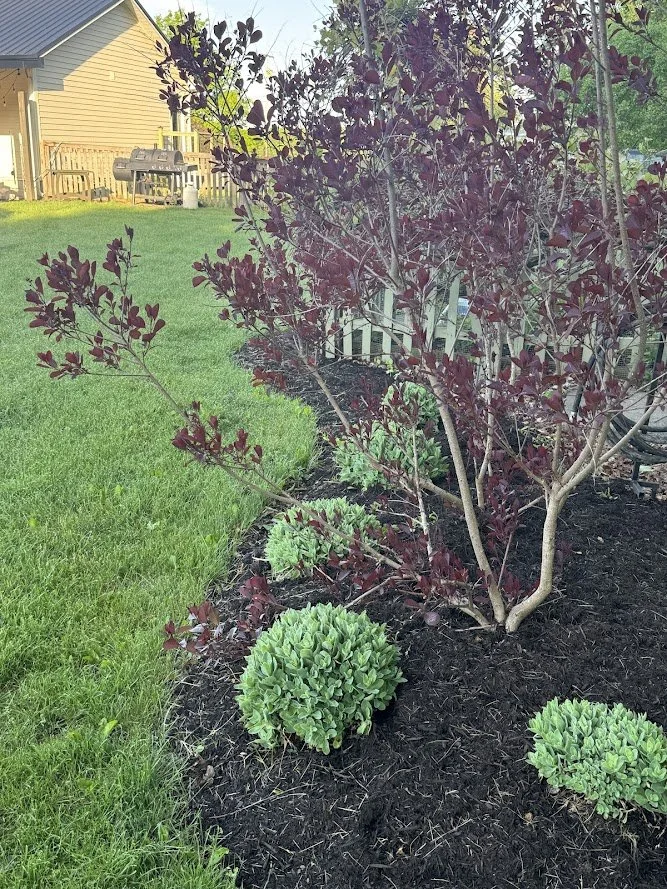
And beyond all of it is the food forest. Fifty-four by thirty-two feet, enclosed by a tall wood-and-wire fence with rolling barn gates. Grapevines climb the perimeter fencing. Inside are herbs, currants, gooseberries, strawberries, rhubarb, asparagus, walking onions, garlic, and elderberries. The beds are mulched with natural wood chips and edged with pavers.
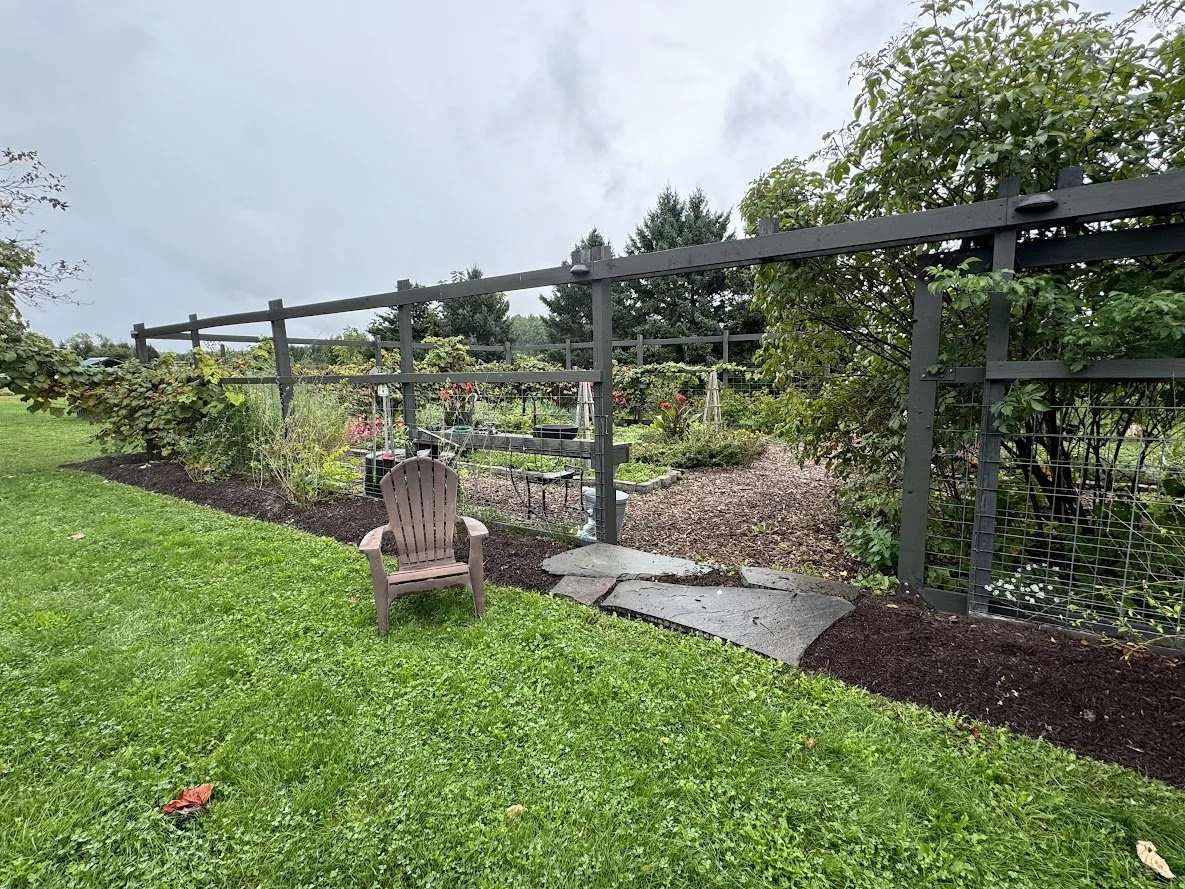
The Food Forest Garden
When people imagine gardening, I think they picture peaceful afternoons clipping flowers. What they do not picture is labor.
The hauling.
The digging.
The wheelbarrows.
The endless spreading of mulch.
The sore back.
The dirt embedded beneath your fingernails for weeks.
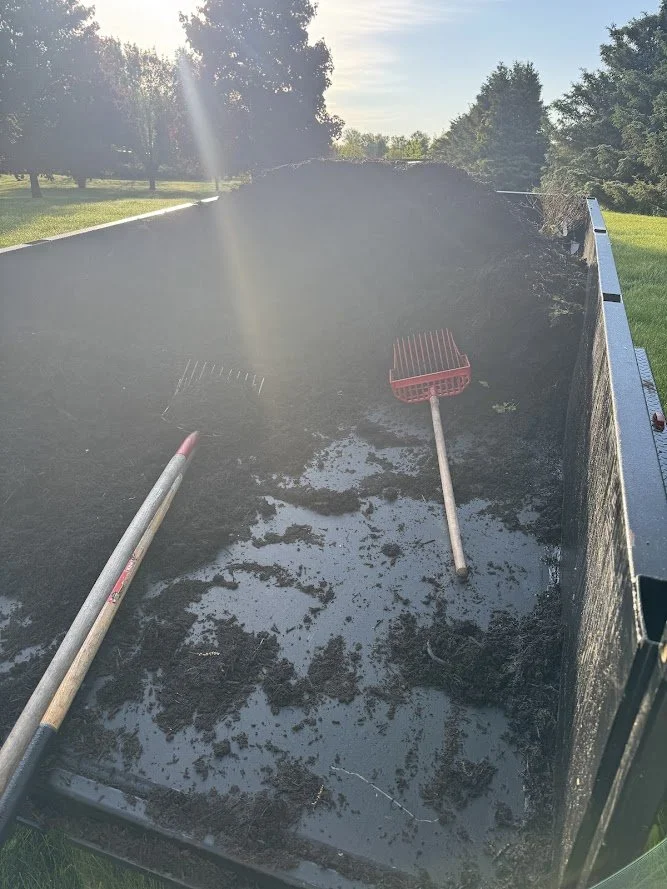
Spreading mulch at a rate of 1 trailer load per day.
And the constant struggle to find help. Every year this is the frustrating part.
I thought I had solved the problem this season. One of our longtime employees, owed me for his car down payment, and we arranged for him to work it off helping in the gardens for 100 hours at a reduced rate. On paper it seemed ideal. In reality, he worked six hours and then disappeared entirely.
Another employee, who works for Serge’s business as a heavy equipment operator, helped more consistently. He came over periodically throughout the cleanup season and probably gave us five solid days altogether. Without help, we really cannot manage the property.
That realization has been growing quietly in the background for several years now. What began as creativity quickly becomes never ending maintenance. That may be the central lesson of owning a large property. At first, every new bed feels exciting, a form of self-expression. You imagine future beauty but not future labor.
But gardens evolve. And eventually the thing you created begins demanding care at a scale you never fully anticipated. It now takes me one to two months every spring just to restore the beds after winter — and that assumes I have help. Lately I’ve started to come to terms that the next phase of this property won’t be about creating more gardens. It will be about simplifying them. Replacing high-maintenance perennials with flowering shrubs. Reducing edging. Reducing division and transplanting. Designing not only for beauty, but for sustainability of effort. Designing for the life I actually have instead of the life I imagined I would always have endless energy to maintain.
And yet, every spring, when I’m out in the garden as the sun is rising, when the mulch fresh and dark, when the beds are tidy and the first flowers begin to emerge, I remember exactly why I built all of it in the first place. And for a brief moment each year, the whole property feels new again.
