

Proof of Life - CTHV 26
Cycle the Hudson Valley is a week-long bike tour that is hosted by PTNY and travels from Troy, NY 200 miles down to end at NYC. It typically attracts about 200 riders and many do the ride every year.
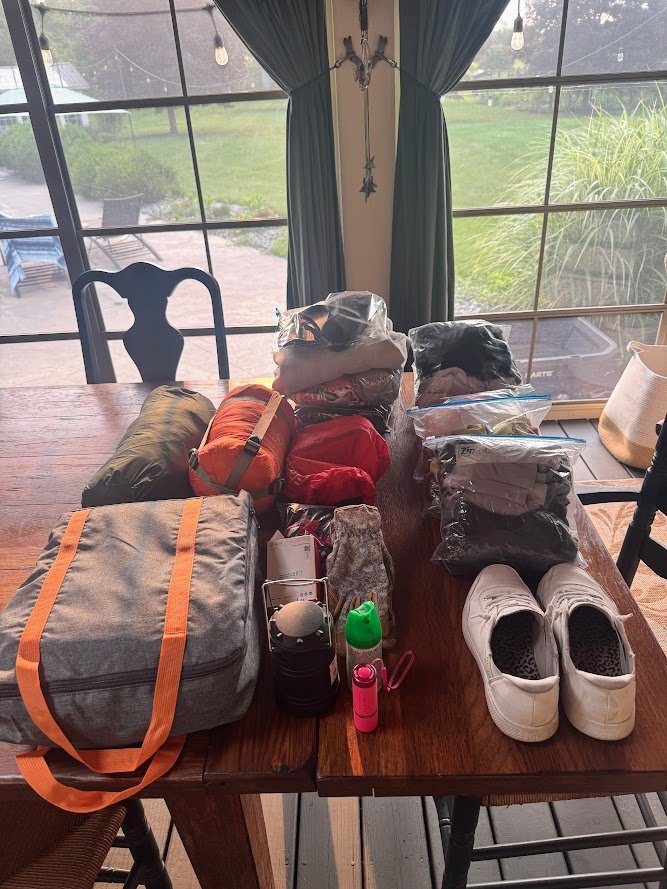
Preparation
Ahead of every tour I spread our gear across the back porch table. Each day’s riding clothes went into a Ziploc bag, with separate bags for:
Shower kit
Bike repair supplies
First Aid Kit
Swimsuit
Camp clothes
Chargers and electronics
Although the tour transported our luggage, I tried to keep everything compact enough to fit into two panniers: bring what I need, but not so much that the gear becomes another burden.
Day 0: Troy, Waterford and Cohoes
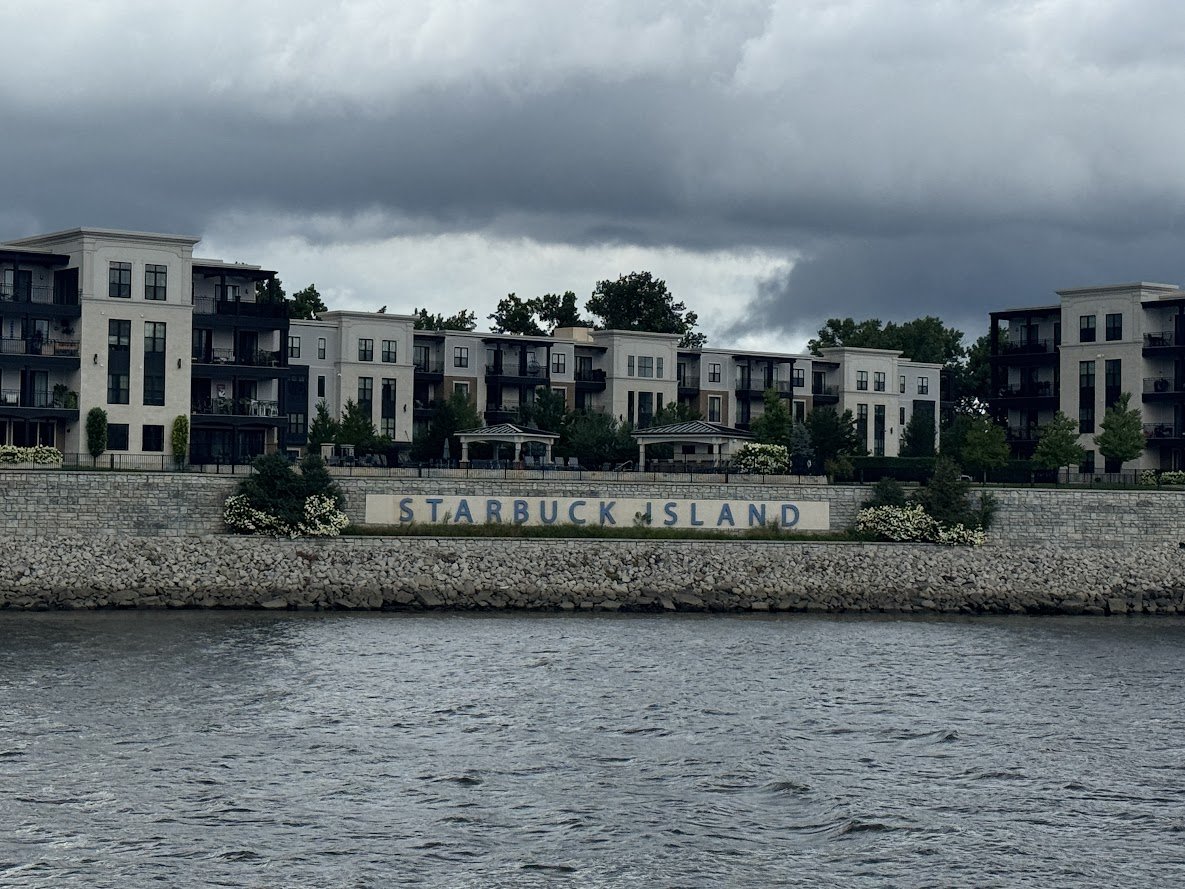
The morning threatened rain, but by afternoon the sky’s were sunny.
The warm up ride was an 18-mile loop along the Hudson and Mohawk Rivers through Waterford, Cohoes and Peebles Island, where the two rivers meet among wooded trails and the ruins of nineteenth-century factories. Old steel bridges, abandoned industrial structures and glimpses of the Cohoes Falls made it feel as though we were riding through the remains of NY’s industrial growth era.
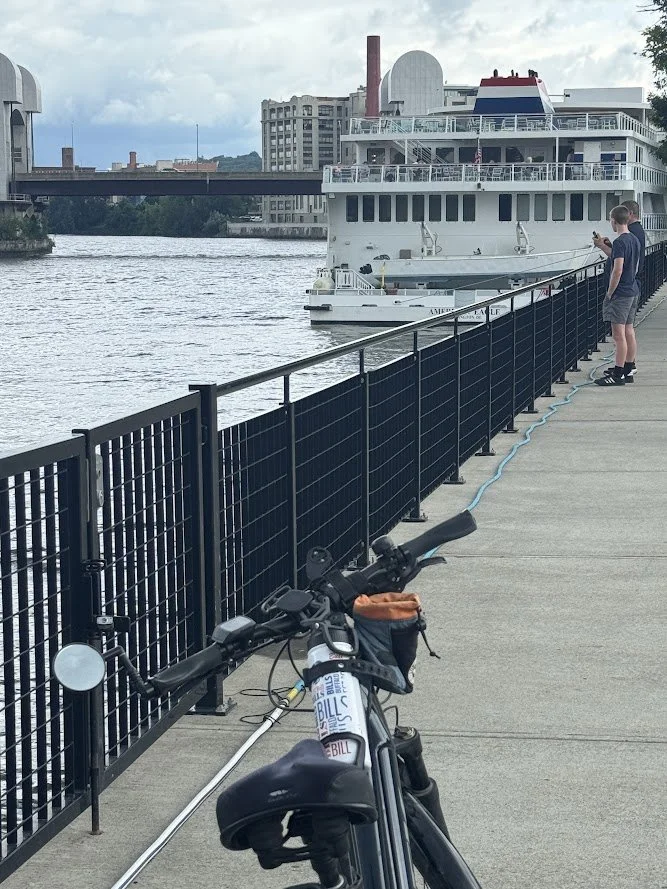
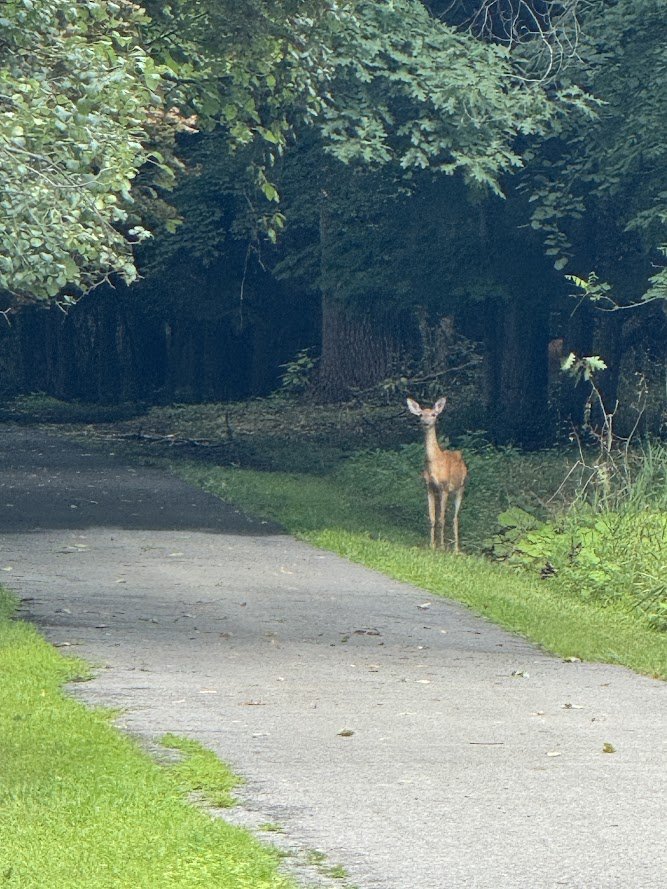
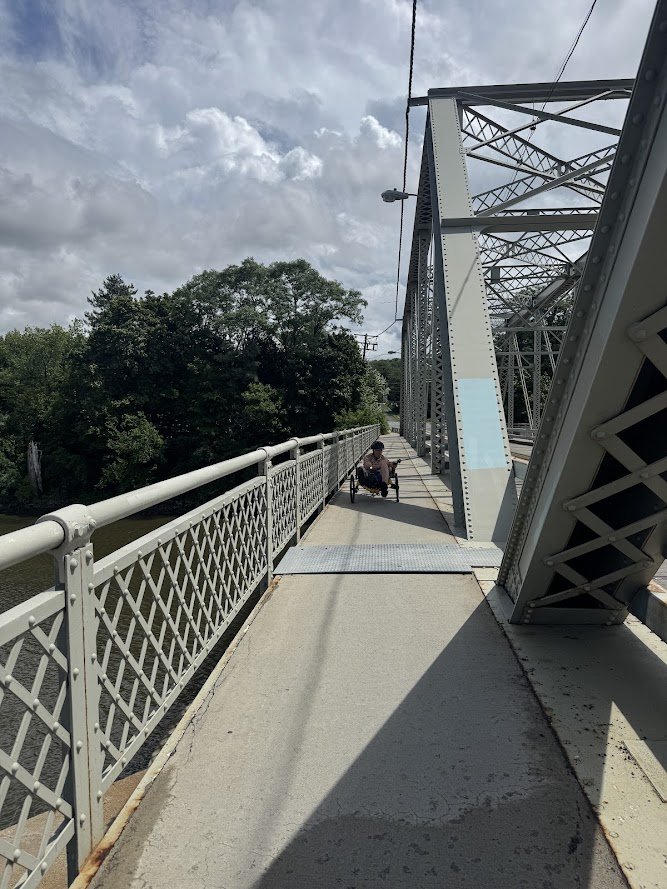
During the ride threatening clouds give way to brilliant blue sky. And by the time we returned to the college a village of colorful tents had appeared across the college lawn.
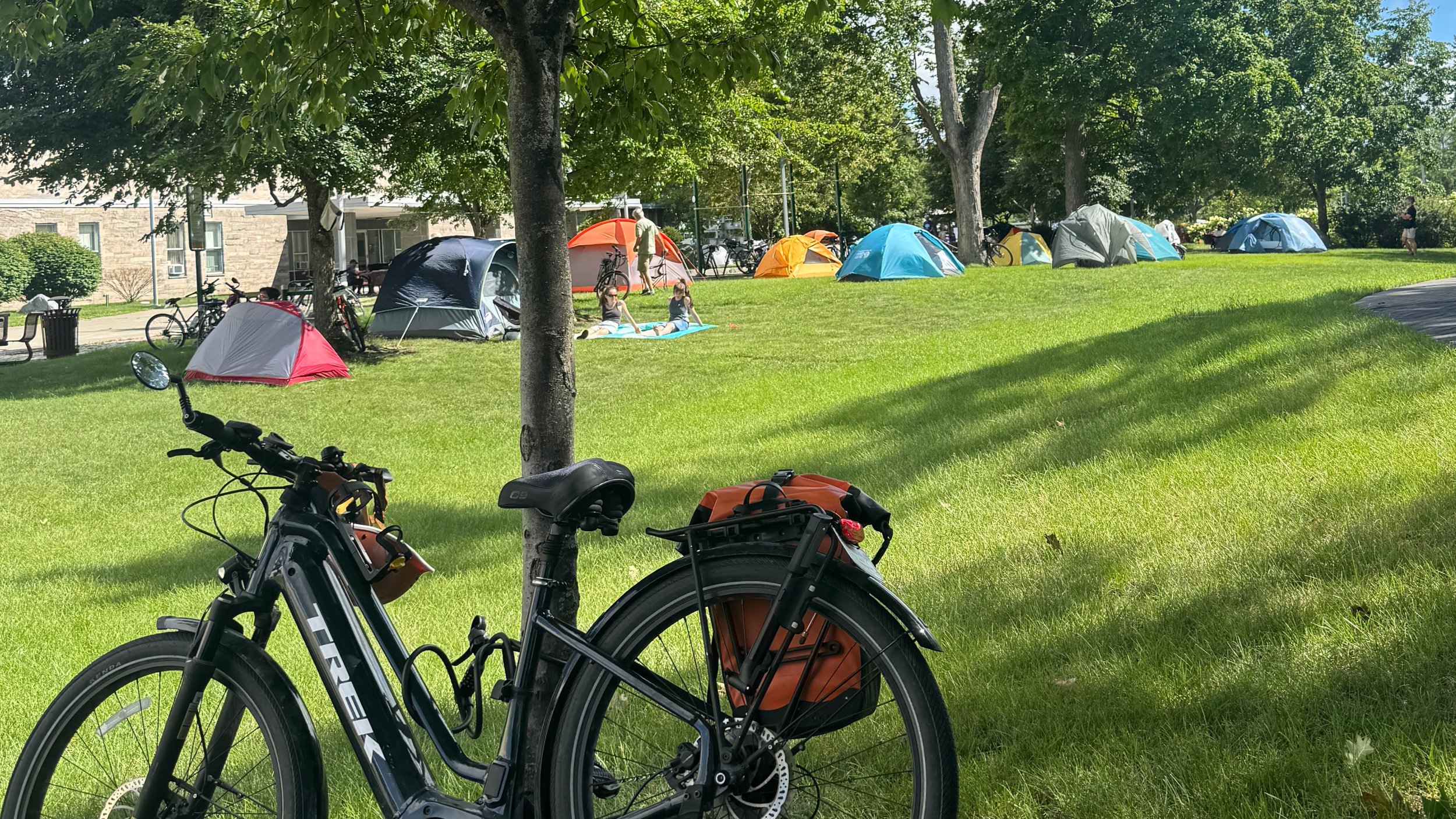
Our first campsite at HVCC
That evening reception included wine, safety talks and a generous buffet.
Dylan gave us some stats on this year’s riders. 240+ riders and volunteers. Average age 65. He asked our oldest rider (86!) to stand up and introduce himself He stood straight His legs looked good and strong.
We ate dinner with Barbara, a solo rider who seemed to have travelled almost everywhere. Then we arranged our cots inside the gymnasium and discovered that the lights would remain on all night. Indoor camping protected us from rain and spared us from pitching a tent. It offered no protection from the glaring hum of fluorescent lighting.
Day 1: Troy to Hudson
Mornings are grim. More than 200 riders move stiffly across the campground. We shuffle toward the coffee, struggle into cycling shoes and fill up at the hot buffet. We climb gingerly onto bicycle seats damp with overnight rain.
Then we ride.
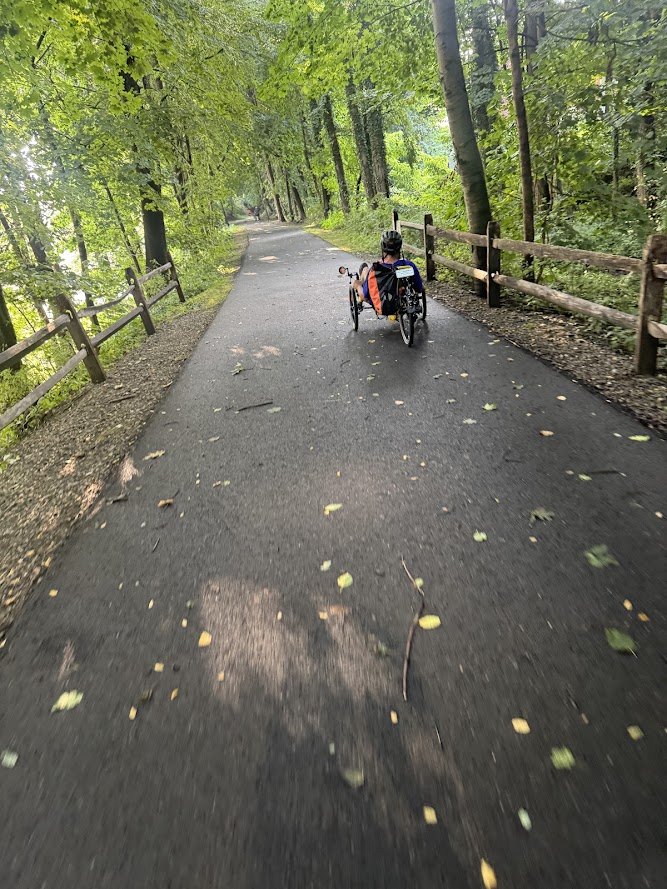
Perfect shady path
Much of the day followed the Albany–Hudson Electric Trail, built along the route of an interurban railway that began carrying passengers between the two cities in 1899. The trolley is gone, but its unusually direct path remains, carrying bicycles through woods, farms and small towns such as Kinderhook, where the historic brick buildings and shaded streets briefly interrupted the long green corridor. We began the official journey south on trails that carried us through countryside, farmland and small communities. We stopped for lunch at the Main Street Diner in Kinderhook and ended the afternoon at a brewery crowded with cyclists recounting the day.
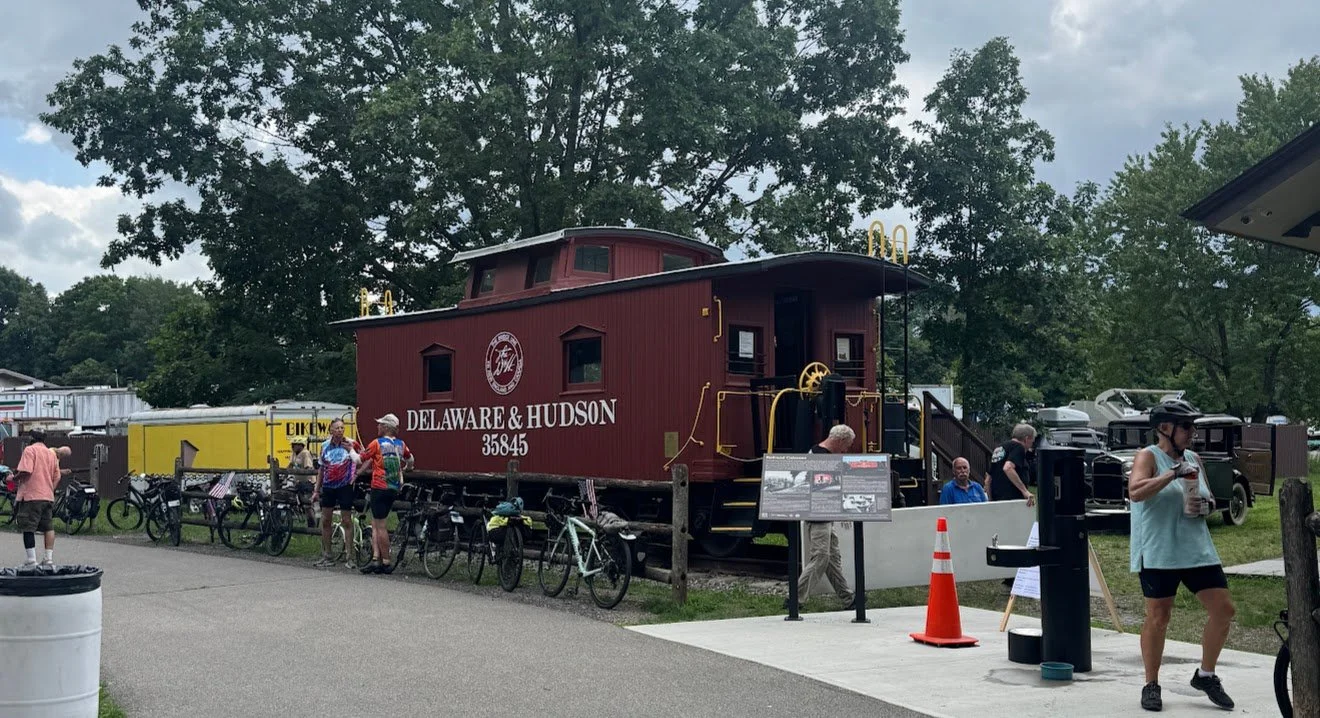
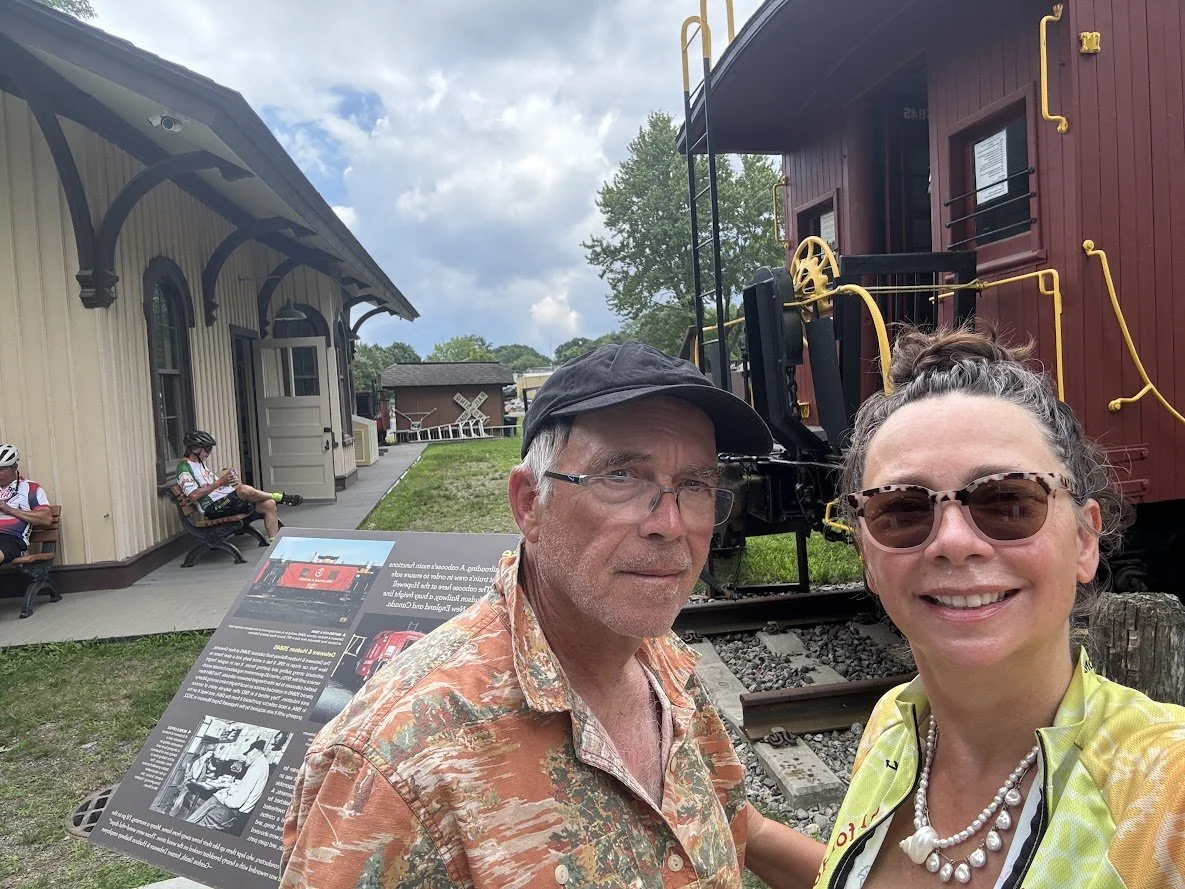
That night at Columbia-Greene Community College, I ate far too much at dinner before laying out our mats under more relentlessly glaring fluorescents.
At about 1:00 a.m., I awoke naseaus and dragged myself to the restroom where I was violently ill. Between the sickness and the brightly lit gym, I barely slept, a towel wrapped around my head. When Serge woke me at 5:30, I wasn’t at all certain I could ride. But I had to try.
Day 2: Hudson to Stone Ridge
Day 2 was 45 miles and considerably hillier. I ate nothing that morning but drank as much as I could, fairly certain that dehydration had contributed to my illness.
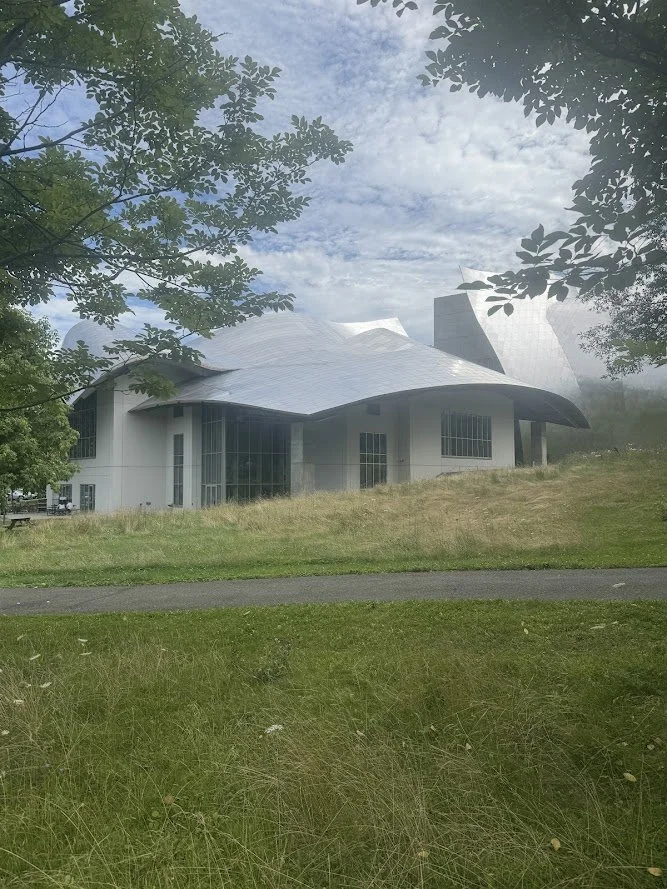
The route passed directly through Bard College, where Frank Gehry’s silver Fisher Center rose unexpectedly from the pastoral campus like a crumpled piece of metal dropped from another world. Soon afterward, we crossed the Kingston–Rhinecliff Bridge—nearly a mile and a half long and suspended high above the Hudson, with automobiles rushing beside us, boats moving below and the Catskills stretching along the horizon.
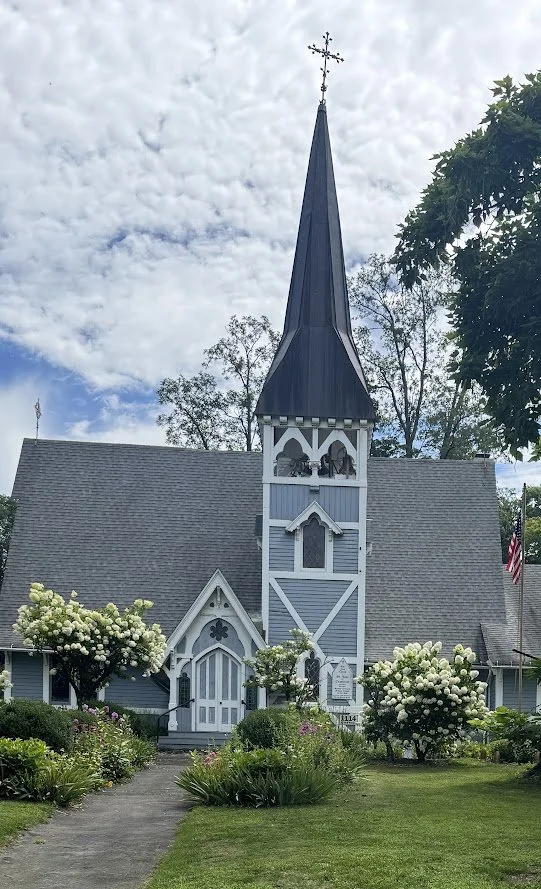
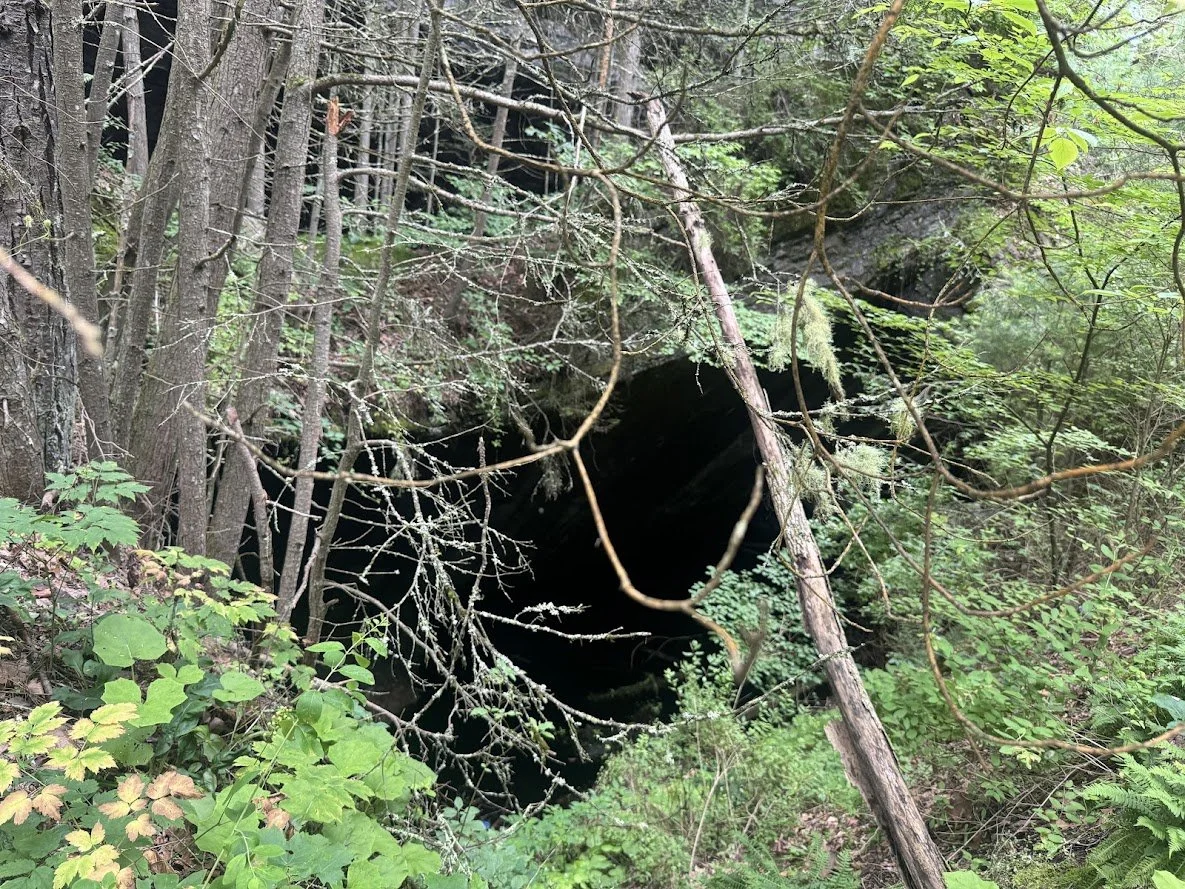
After a cautious lunch of fish and salad on Kingston’s Rondout waterfront, we continued toward Rosendale. Near Rosendale, cold air suddenly poured from dark openings in the rock beside the Wallkill Valley Rail Trail. These were not natural caves but remnants of the mines that supplied Rosendale cement, once used in structures including the Brooklyn Bridge and the base of the Statue of Liberty. The underground chambers remain close to 52 degrees year-round, so on a hot August day they seemed to breathe refrigerated air directly into the forest.
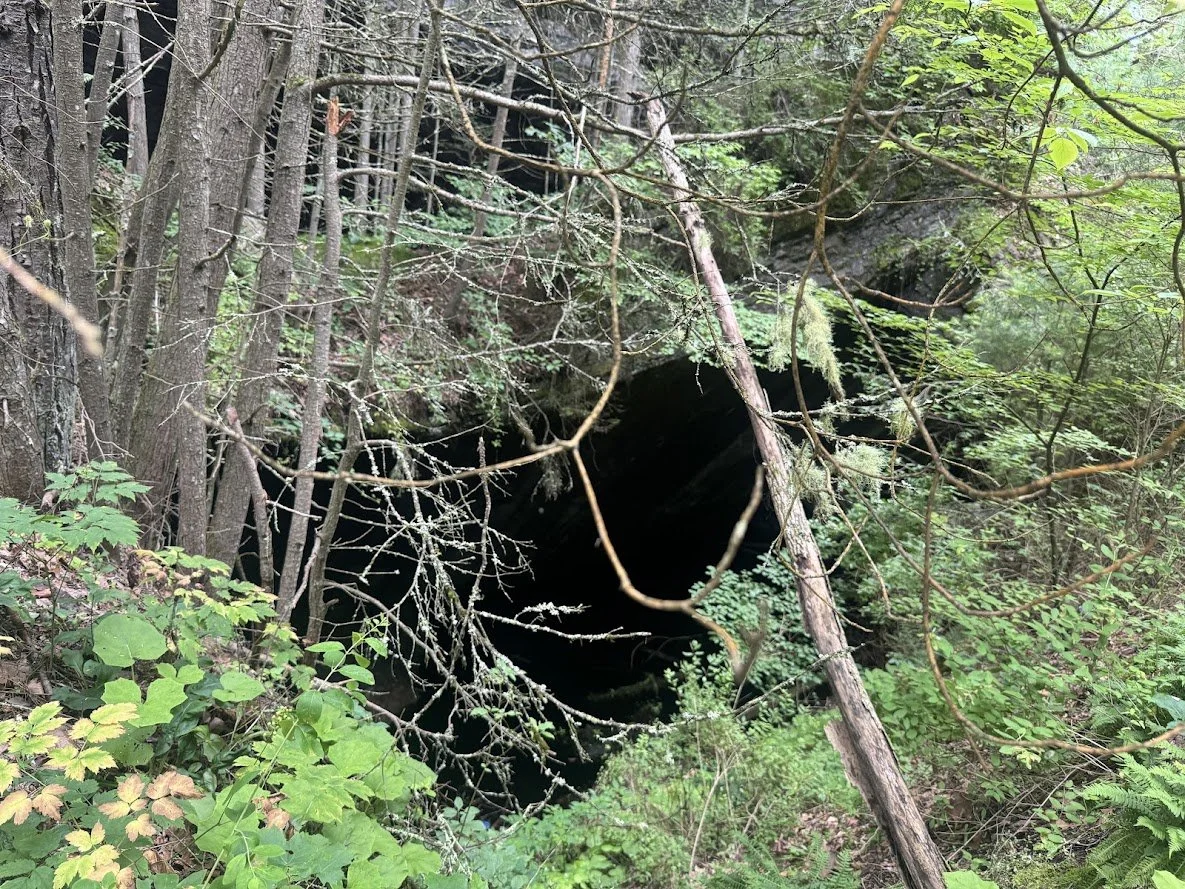
One of the cooling caverns
We reached SUNY Ulster after 45 hilly miles, then took a shuttle into Rosendale with four white-bearded riders calling themselves the Singing Santas. In this eccentric little town of old buildings, industrial ruins and slightly hippie energy, two young men invited us into a puppet workshop and museum for an impromptu show. We stopped for drinks and a lite dinner on main street at an old inn that had been recently renovated into an 21 room hotel, restaurant and bar. The owners offered us a tour.
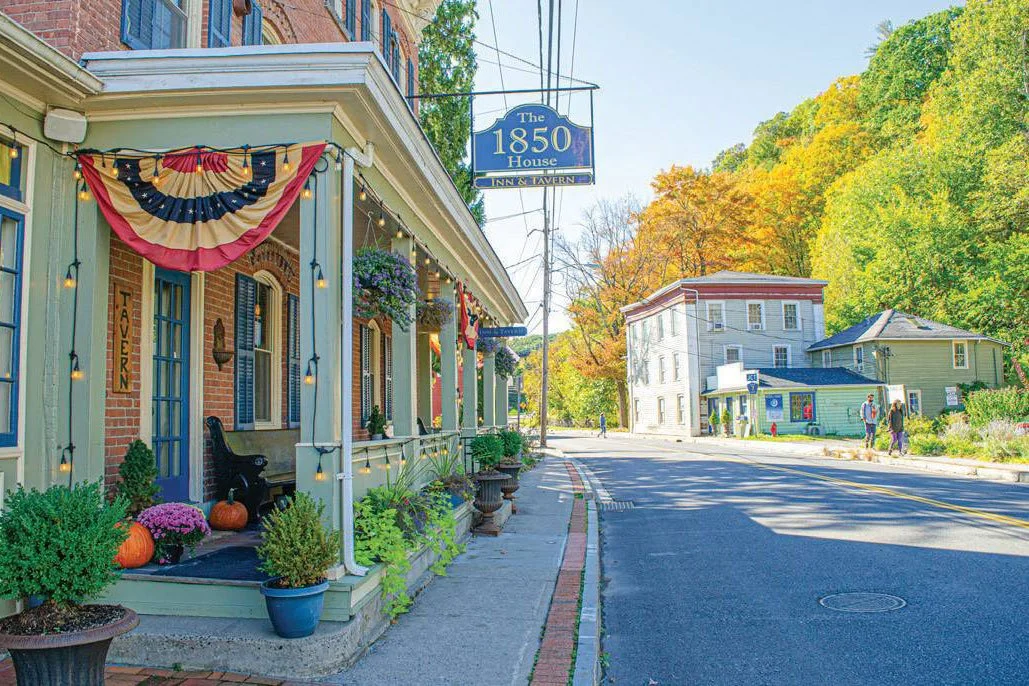
Our dinner spot for the evening in Rosendale, the 1850 House - 11 room inn with restaurant, bar, and huge deck overlooking the river.
I had begun the morning exhausted, recently sick and unsure whether I could ride. I ended it having crossed the Hudson, toured Bard, felt cold air flowing from old mines and watched a puppet show in Rosendale. And another night under the relentless lights
Day 3: Sixty-Six Miles in the Heat
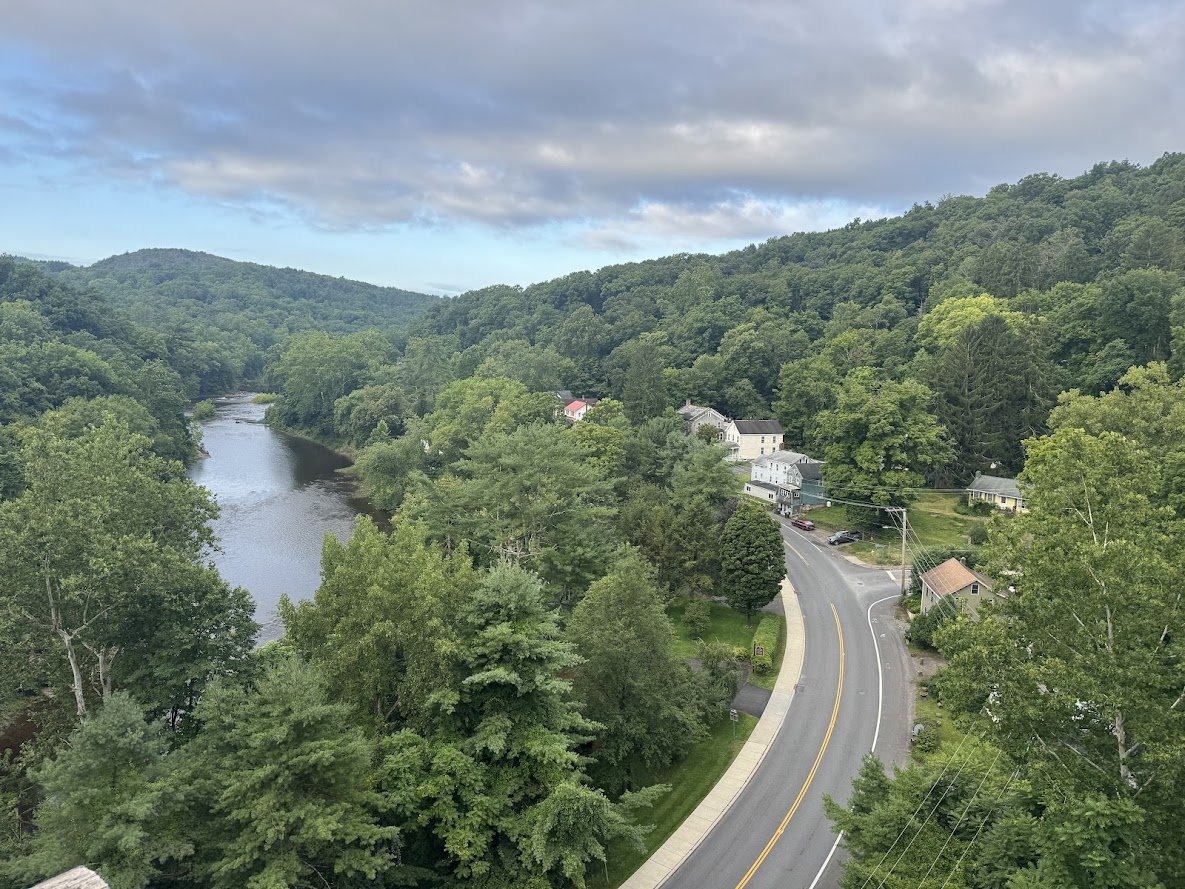
Serge and I were on the road by 7:30. The morning was cool and misty, and we spent the early miles riding through quiet, shady forest. Leaving Stone Ridge, we returned to the Wallkill Valley Rail Trail and crossed the Rosendale Trestle, a former railroad bridge carried high above Rondout Creek. From the deck, the little town, forested hills and remnants of its cement industry spread below us—the entire strange place we had explored the previous evening suddenly visible from above.
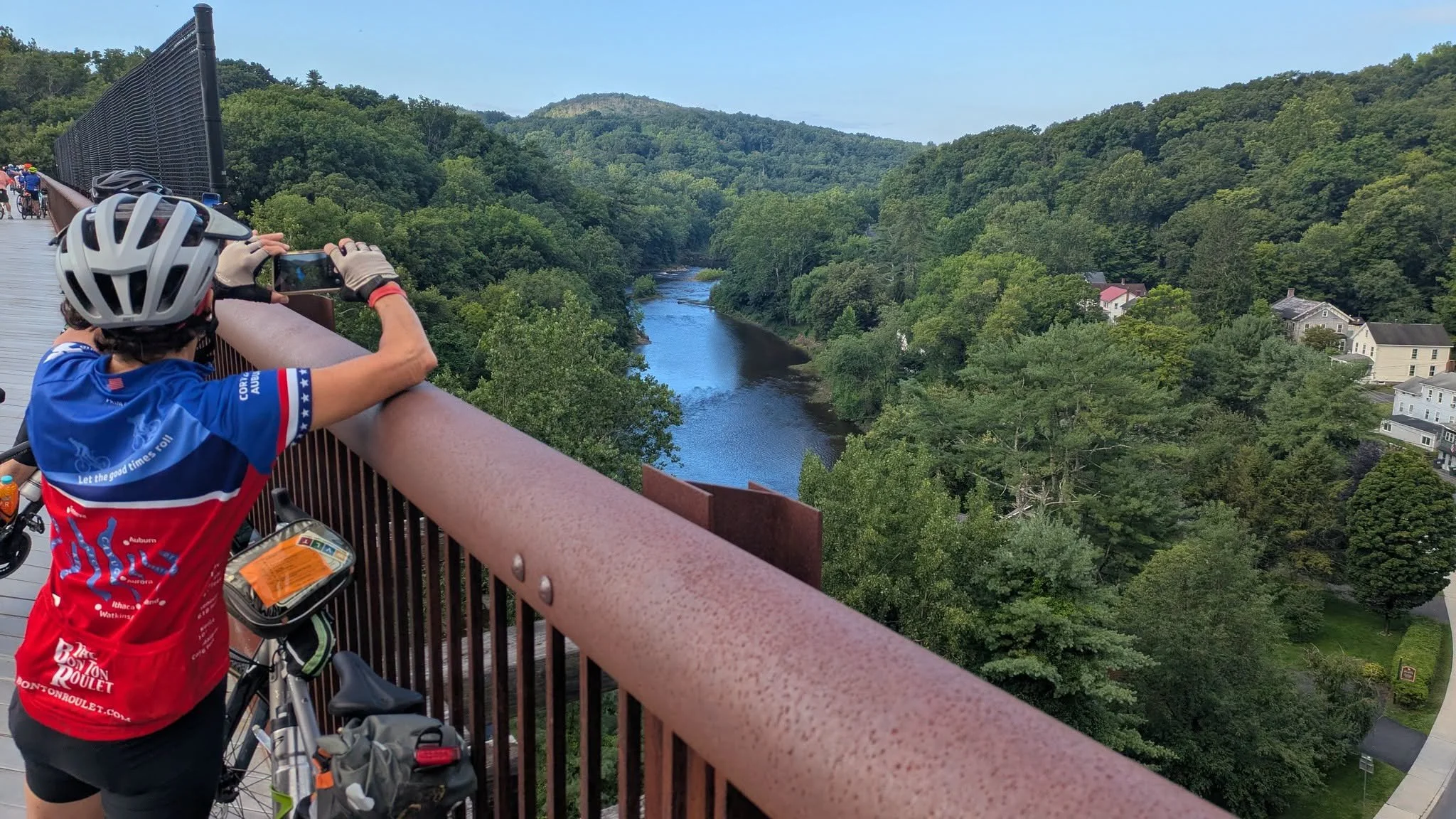
From the Rosendale Trestle
We crossed the Walkway Over the Hudson, more than 200 feet above the river, and continued along rail trails through forests, wetlands and reservoirs. Serge rode 33 miles before taking the SAG wagon. I continued, riding for a while with Kathy, a journalist and reconnecting with Maureen—Moe—whom I had met on two previous tours. These friendships unfolded in pieces: a few miles together, a rest stop, a shared meal and another encounter farther down the trail.
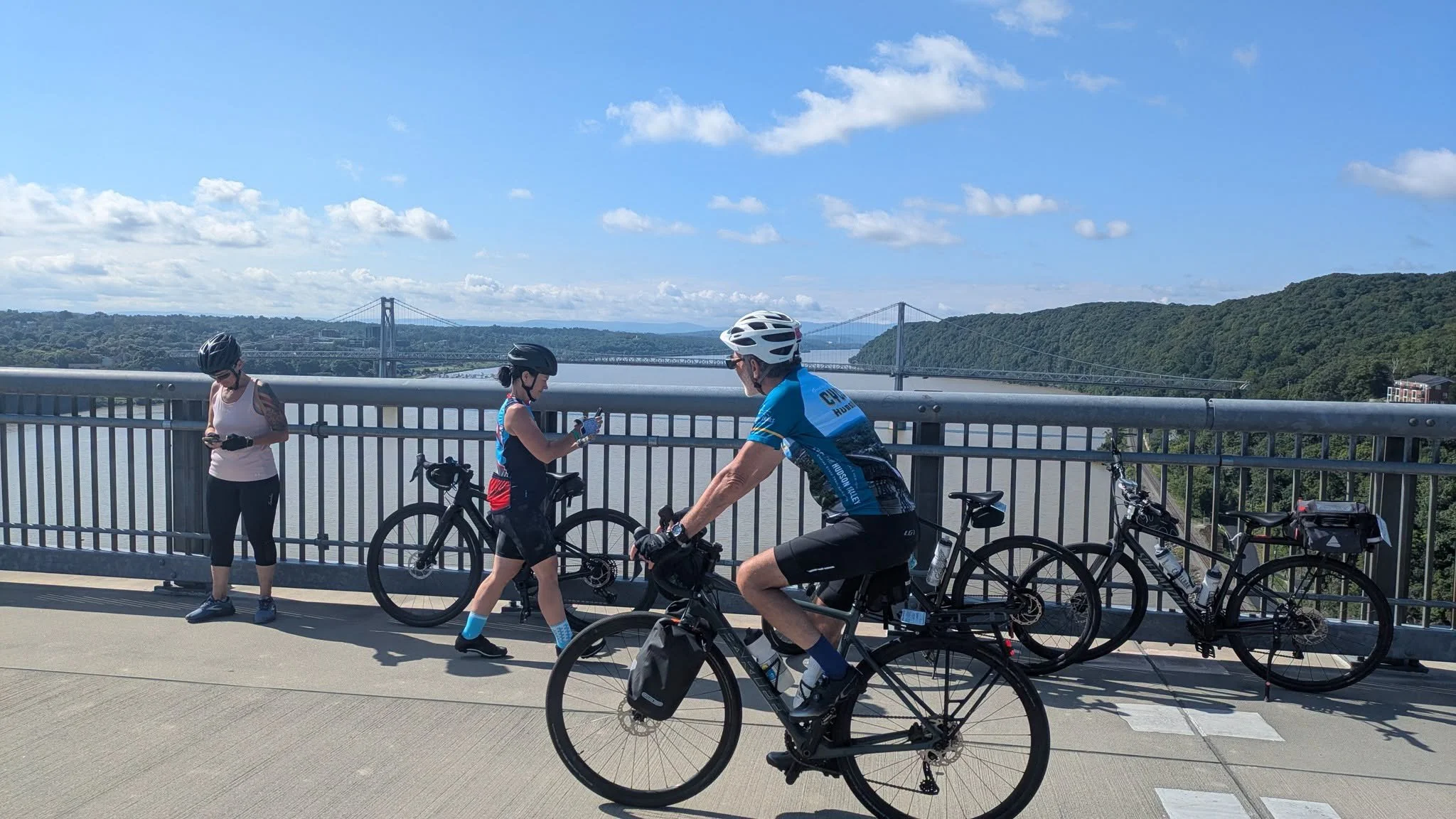
Walkway over the Hudson
By afternoon, the temperature approached 90 degrees and the final miles became a long uphill slog under the full sun. I passed reservoirs that supply New York City and imagined diving into every one. At camp, a shuttle driver took Kathy and me to a nearby lake where we slipped into cold, clear water. It was glorious. Serge booked a room at the Comfort Inn, and we ended the longest day of the tour with real darkness, a comfortable bed and the unglamorous luxury of washing our nasty bicycle clothes.
Day 4: Carmel to Dobbs Ferry
We awoke at the Comfort Inn and immediately had to rush. A local taxi got us back to Putnam County Veterans Memorial Park just in time to throw our luggage onto the truck and join the last wave of riders. It was another brutally hot day, but most of the ride was downhill and through shady forest paths.
At the second rest stop, we met up with Kathy and another rider named Don, and the four of us escaped to a nearby diner for burgers and milkshakes. When we returned, the bicycles had been baking in the sun. My grips burned my hands.
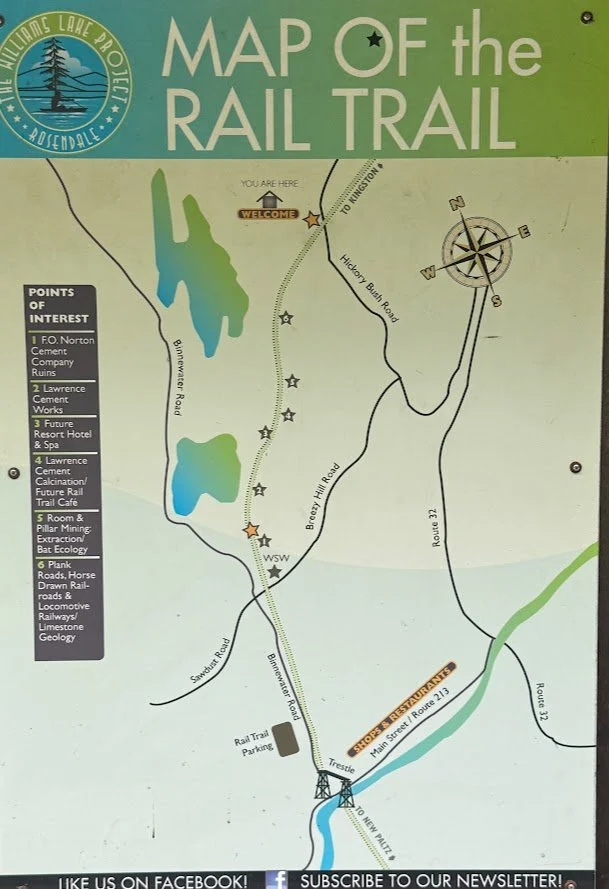
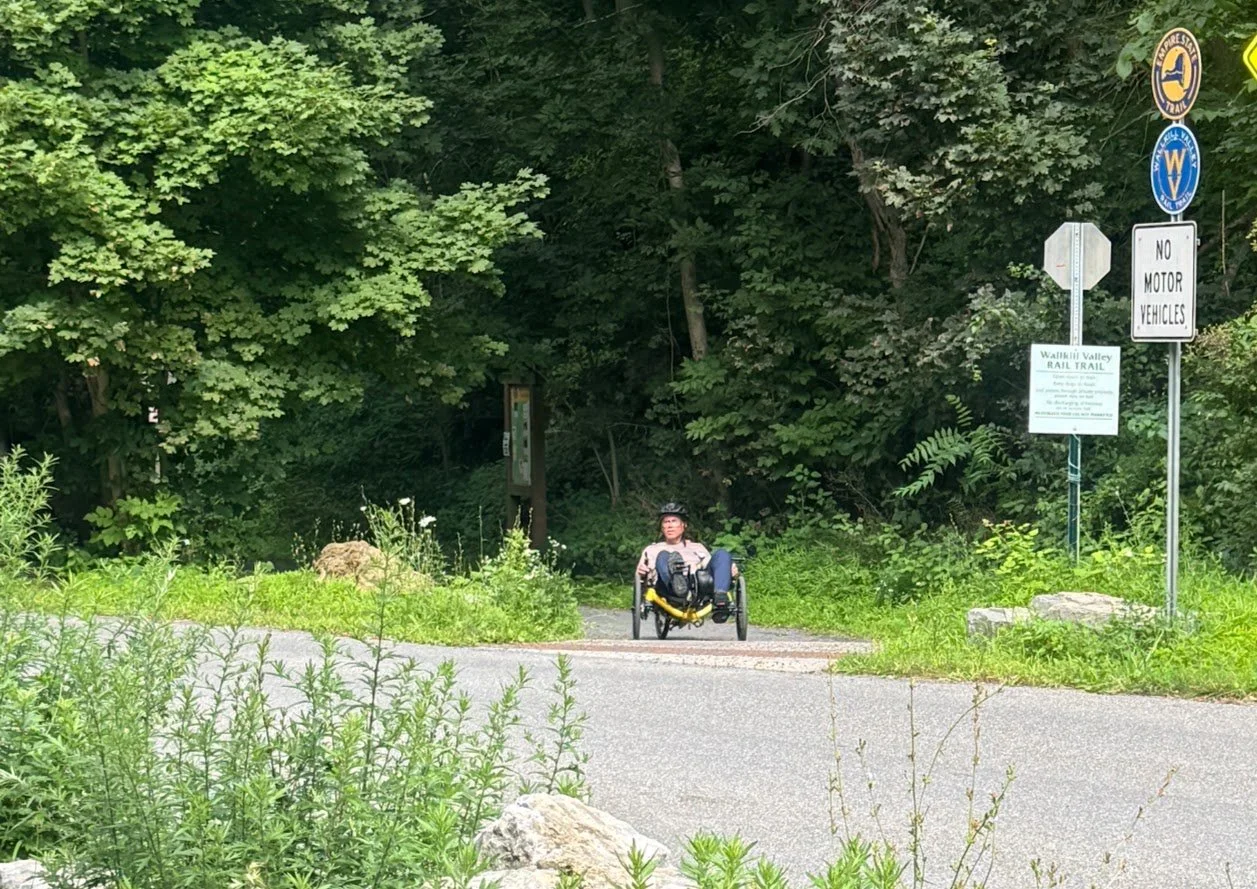
After 39 miles, we reached The Masters School in Dobbs Ferry, where wine and appetizers were waiting. Our cots went into the school’s clean, modern fencing gym—and, for once, the lights went completely out. While other riders went downtown for dinner, Serge rested and I worked on my Irish family heritage project. Tomorrow, we would ride into New York City.
Day 5: After the Storm
A storm passed through during the night, leaving trees and heavy branches across the trail. Riders stopped, squeezed through narrow openings and hauled their bicycles over the debris. What struck me was how quickly it became everyone for themselves. If a few people had stopped to hold branches, lift bicycles and clear a passage, everyone could have moved through faster.
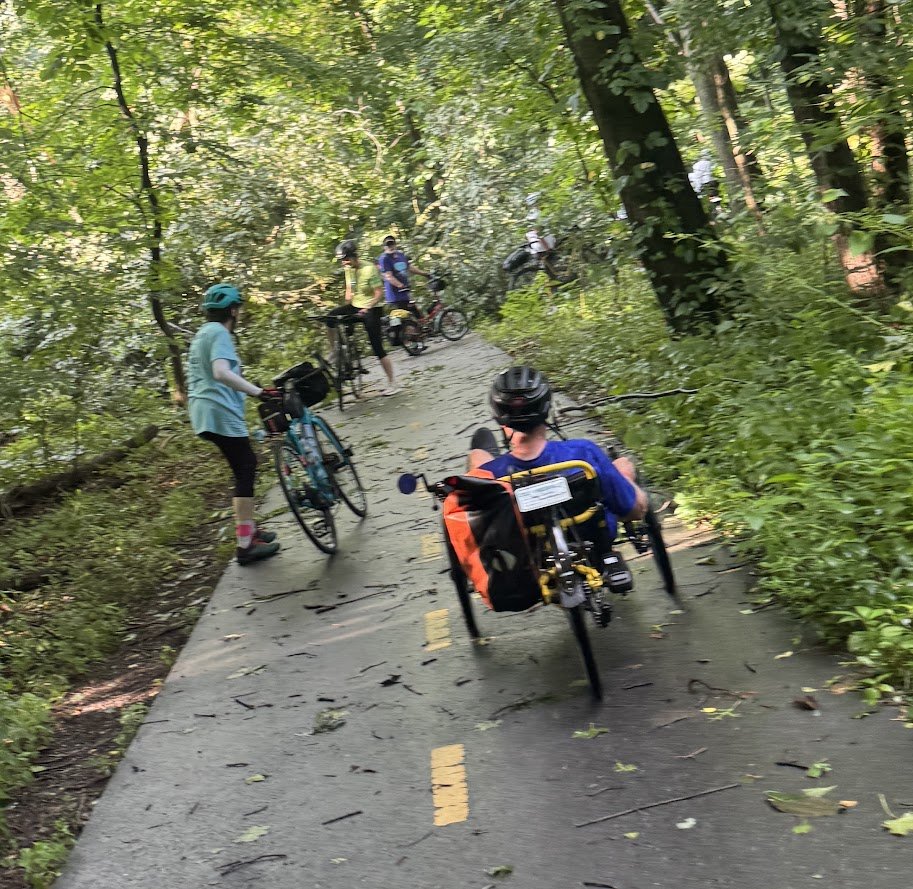
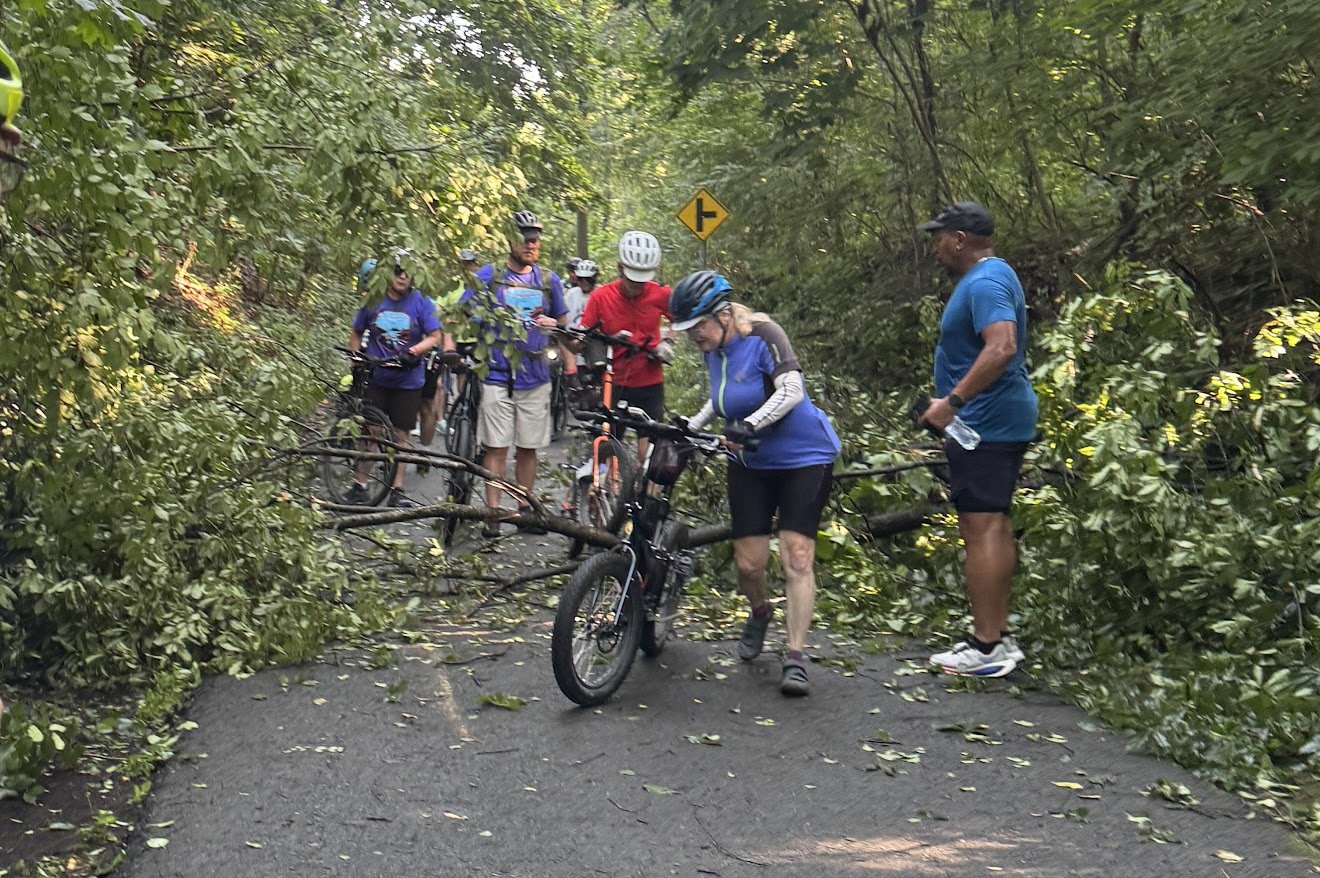
Instead, more than 200 adventurers became more than 200 individuals, each finding a separate way around the same fallen tree. There were notable exceptions A seasoned gentleman rider stripped away as much of the poison ivy he could 2 young local bikers stopped and helped lift bikes over the trunks I helped one of the singing Santa’s lift his ebike Kathy, Serge, and I stuck together - a mutual aid society
A Chaotic end in NYC
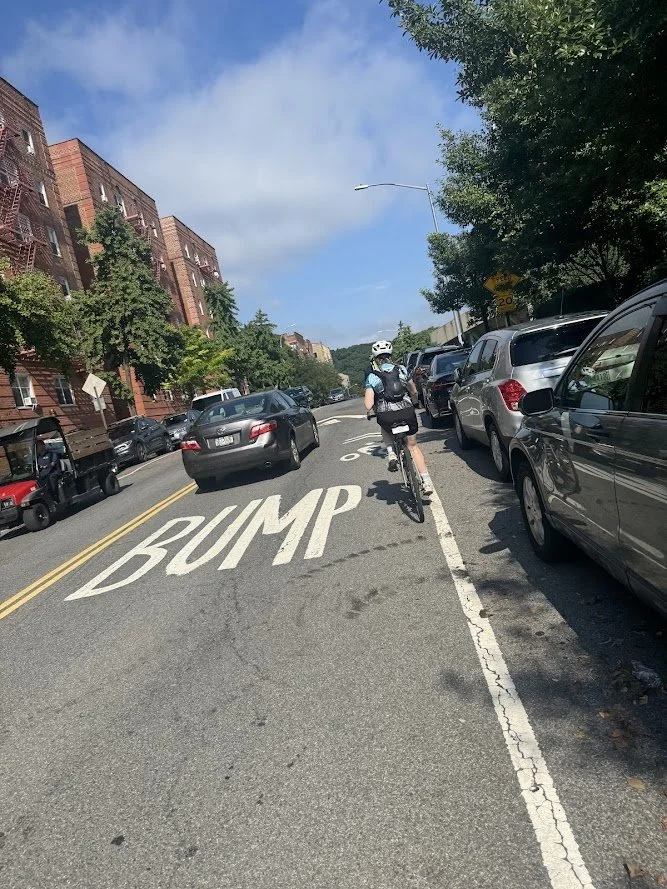
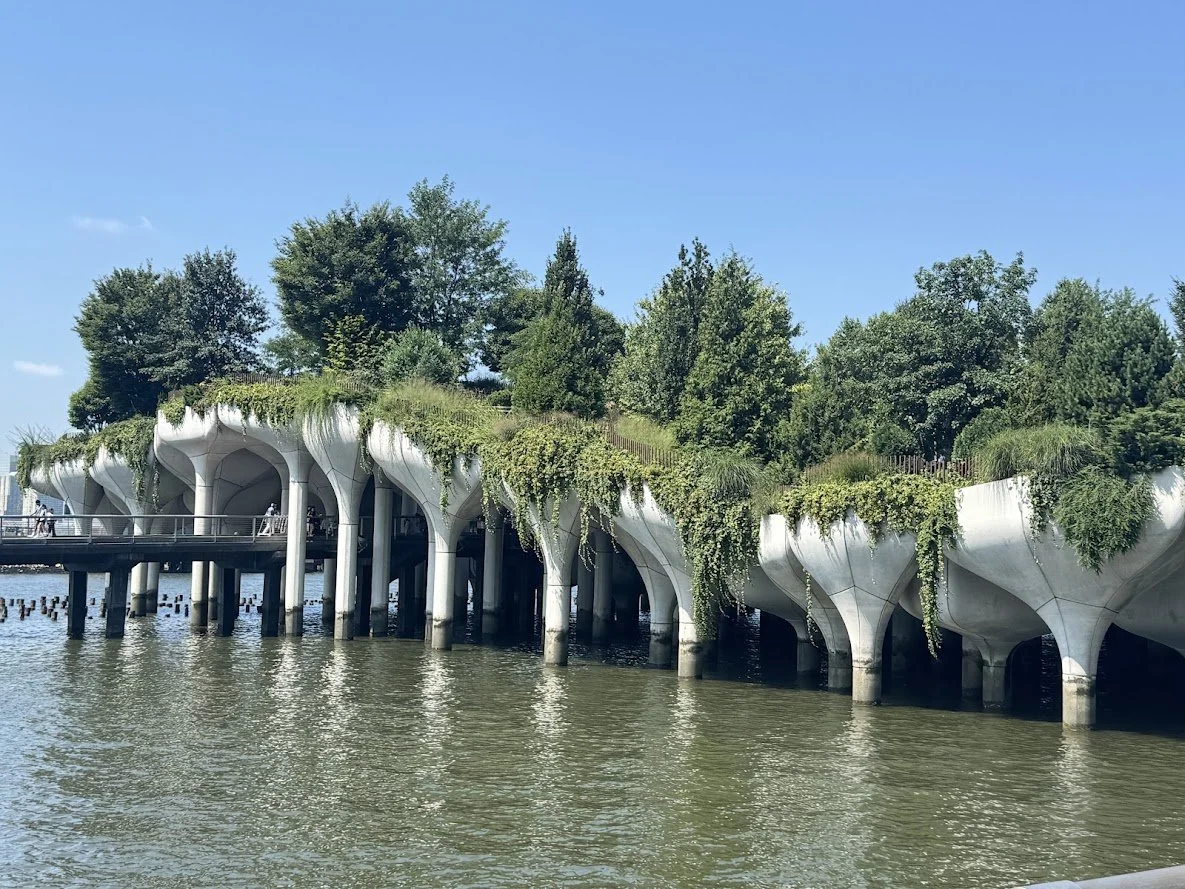
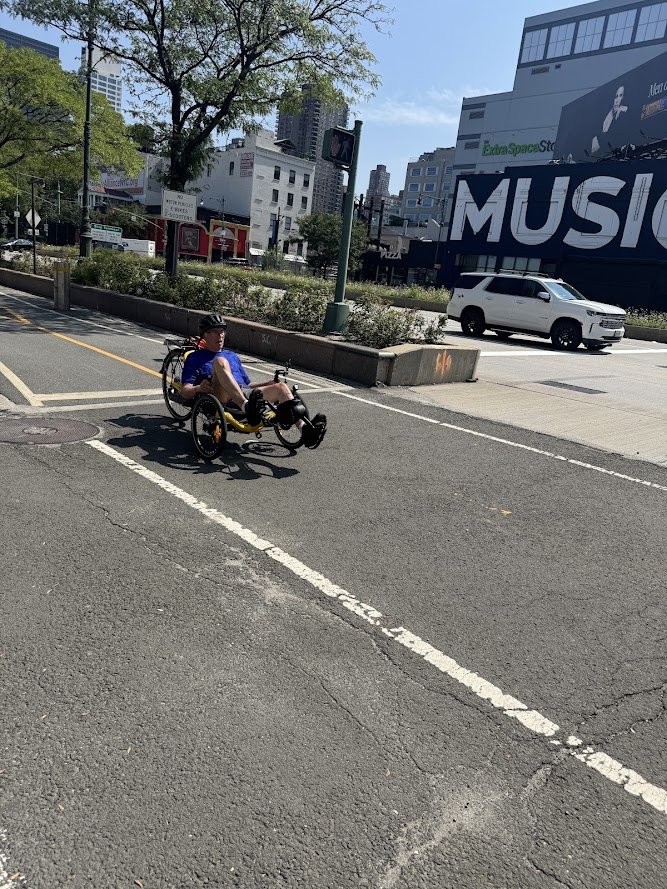
The quiet trail eventually surrendered to New York City. Suddenly we were riding through noise, traffic, pedestrians, delivery bikes and riders stopping without warning, all of us trying to stay together while the city surged around us. After days of forests, rivers and long open stretches, the final miles felt compressed and chaotic—horns, voices, wheels and bodies competing for the same narrow strip of pavement. We had ridden nearly the length of the Hudson Valley only to be swallowed whole by Manhattan.
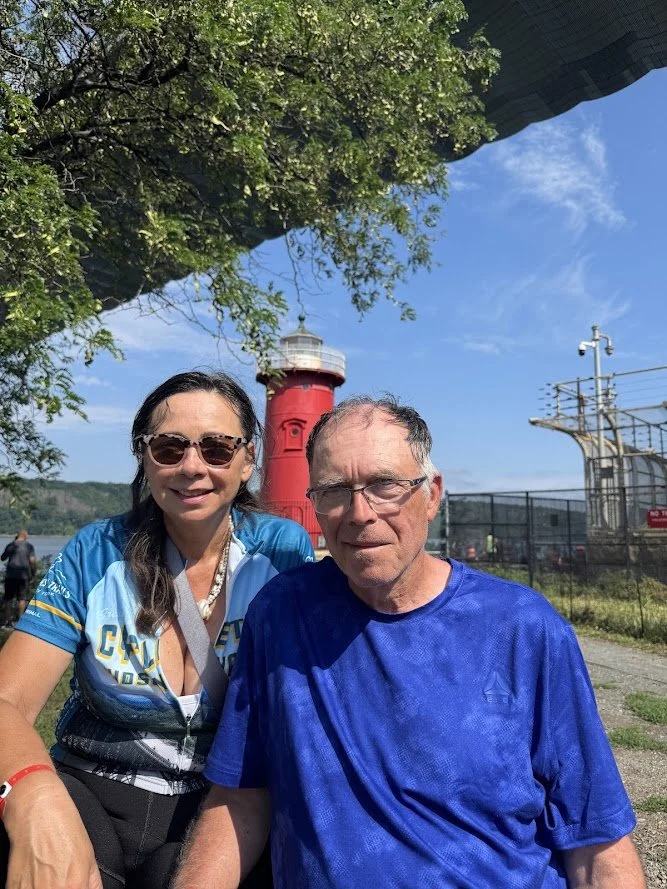
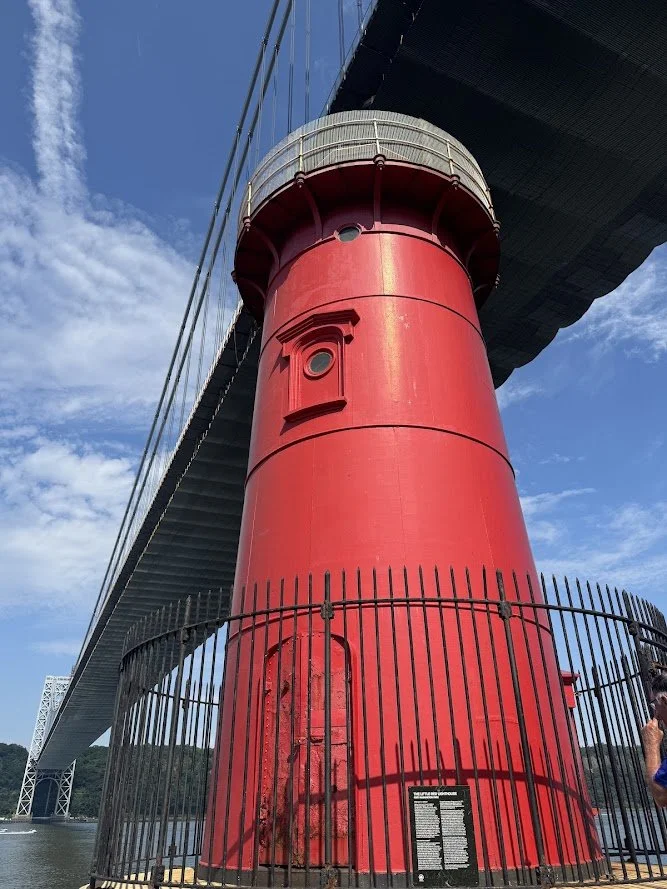
Beneath the enormous steel span of the George Washington Bridge stood the Little Red Lighthouse—Manhattan’s last remaining lighthouse, looking almost toy-sized beside the bridge above it. The construction of the bridge made the lighthouse obsolete, but public affection for the children’s book The Little Red Lighthouse and the Great Gray Bridge helped save it from demolition. After days of large landscapes and long distances, its stubborn survival seemed appropriate.
The whole tour, we had been following the pink Dan Henry arrows—small circles painted on the pavement with a line pointing the way - laid down by volunteers days ahead of the tour.
But in New York City, someone missed the memo. The markings were few and far between, and the ones we found were dark red or white, and hard to see. Riders disappeared down the wrong streets and came back toward us. We stopped, turned around and gathered in anxious little clusters, bent over phones that were dying or giving us directions that didn’t match the route.
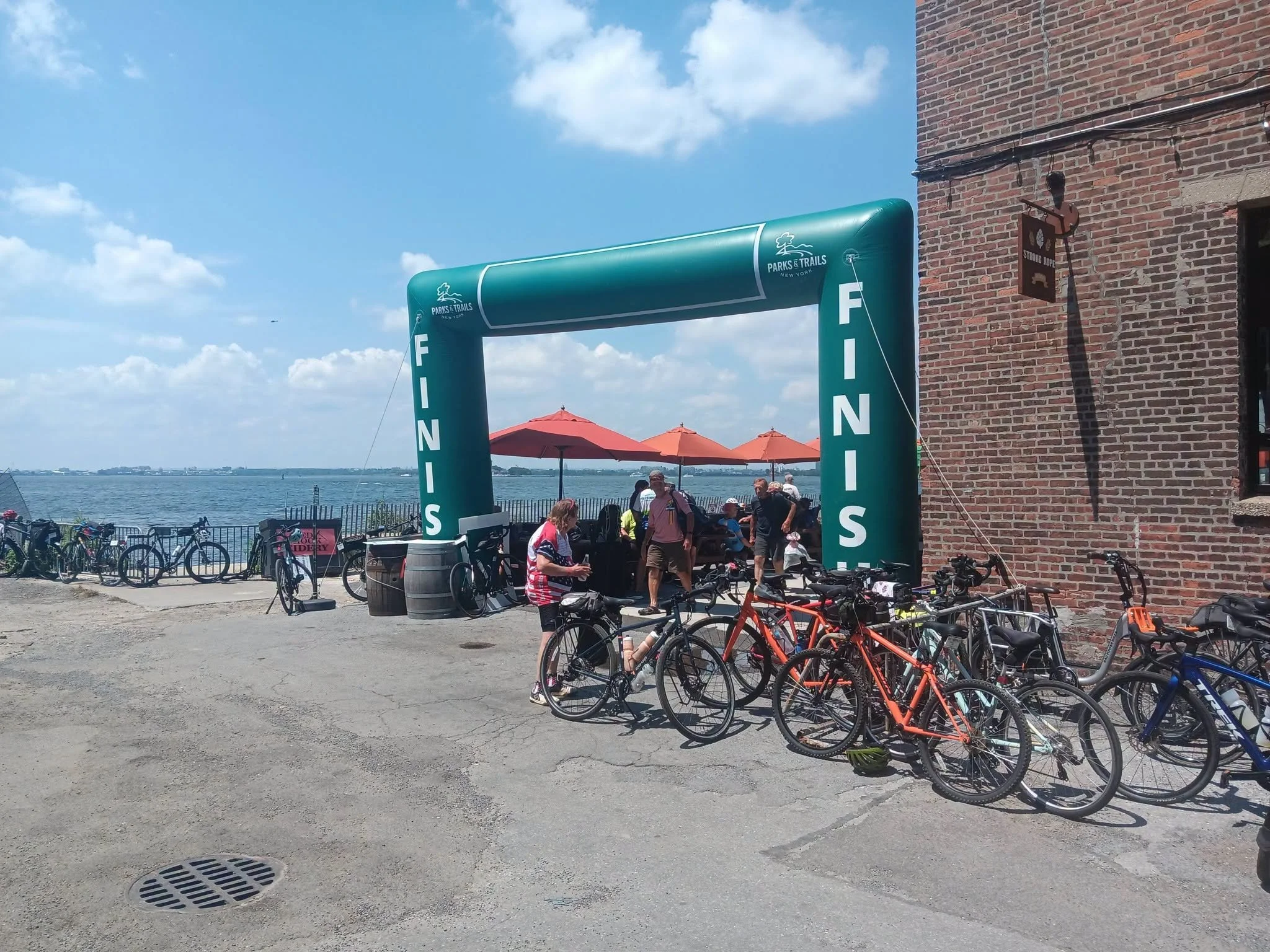
We met up with some familiar tour companions and together found our way to the brewery at the end of Brooklyn just minutes before our shuttle bus arrived to take us back to Troy
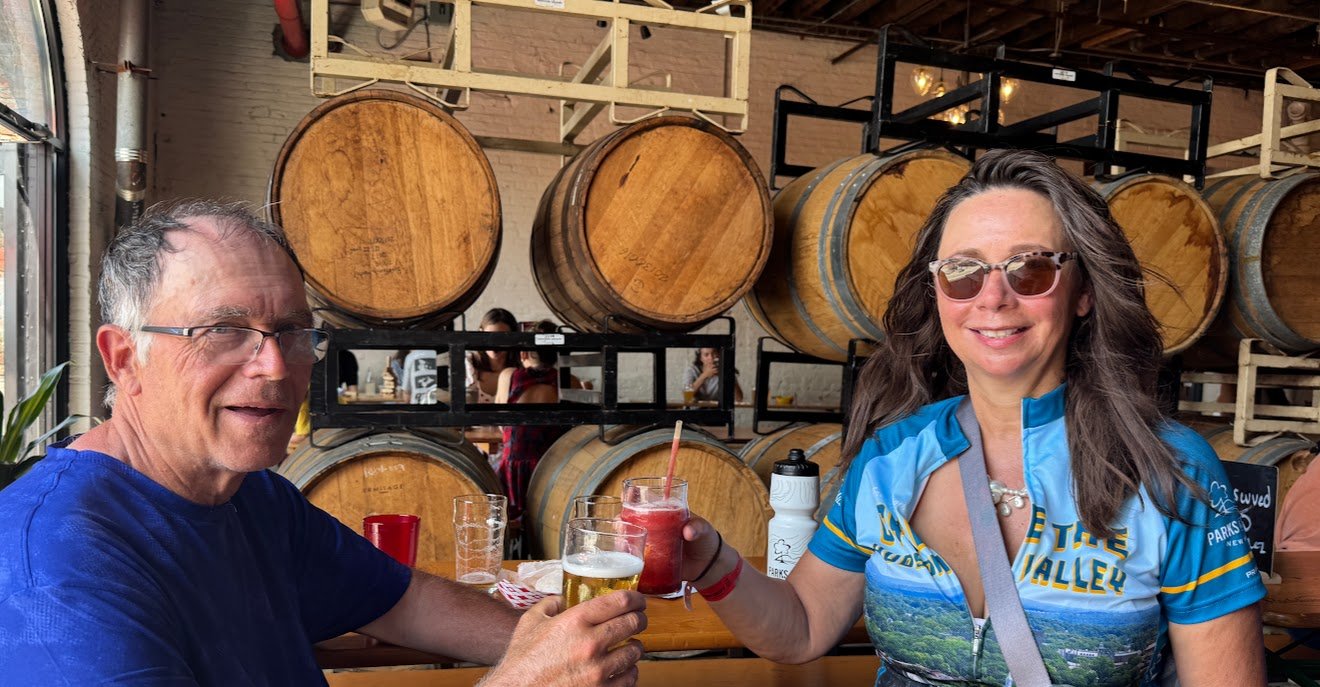
Cheers at the Finish Line
Cold celebratory drinks and then we climbed into the bus to head home.
