Te Anau & Fiordland: Wild Weather, Glowworm Light, and the Long Road to Milford Sound - March 2023
From the adrenaline and brightness of Queenstown, we headed south and west — toward a landscape that feels older, quieter, and profoundly untamed.
Te Anau sits on the edge of Fiordland, where civilization thins out and nature begins to speak in a deeper voice. This part of New Zealand simply exists — vast, moody, and unapologetically wild.
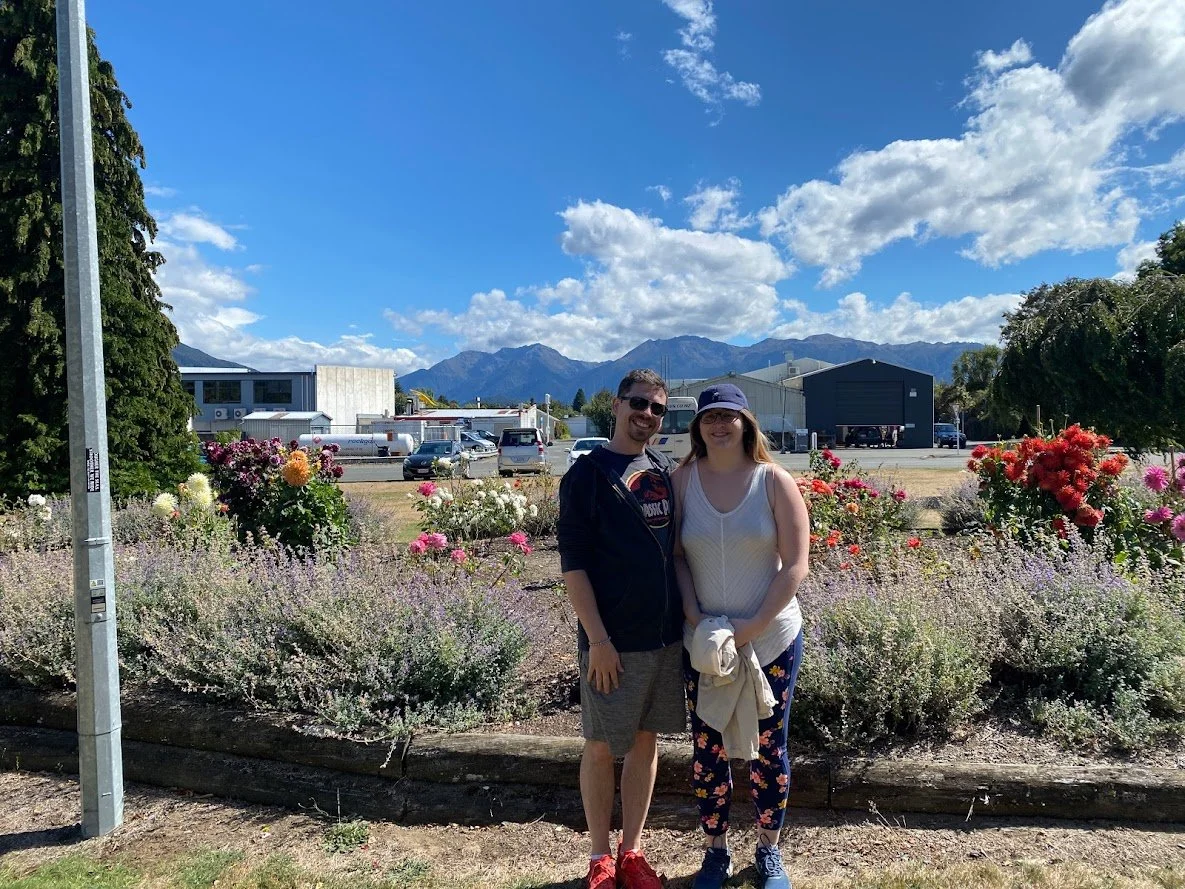
Southland & Fiordland: At the Edge of the Map
The drive into the Southlands felt like a gradual shedding of modern life. Towns grew smaller, roads stretched longer, and sheep began to outnumber cars.
Fiordland is one of the most remote and dramatic regions in New Zealand — carved by glaciers, shaped by relentless rain, and protected as a national park that feels almost sacred. Mountains rise steeply from valleys, lakes stretch dark and reflective, and clouds move fast, changing the mood of the landscape by the minute.
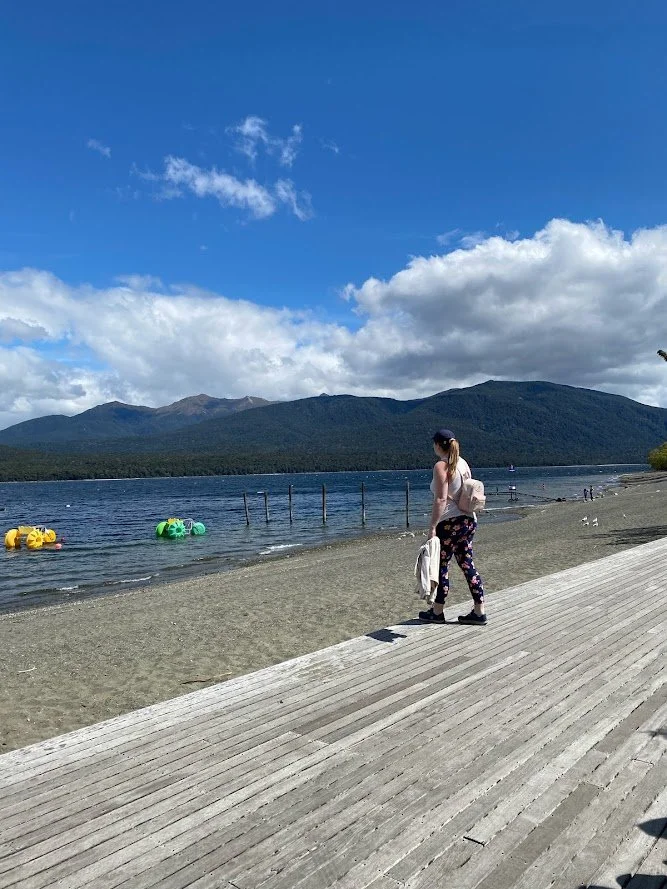
Here, the weather is never predictable — sun, mist, rain, and wind often cycle through in a single afternoon. And somehow, that only adds to the magic.
Te Anau: Quiet, Wild, and Grounded
Te Anau itself is small and understated — a gateway rather than a destination. Accommodations were basic, with limited options, but it didn’t matter. We weren’t here to linger indoors.
This is a place designed for early mornings, layers of clothing, and long days outside.
Despite its wildness, Te Anau has moments of surprising beauty: lovely gardens, lakeside paths, and pockets of calm where flowers bloom against a backdrop of looming mountains. It’s a town that feels practical, humble, and deeply connected to the land.
Lake Te Anau & the Glowworm Caves
One of the most enchanting experiences here was our boat tour across Lake Te Anau, gliding over dark, still water toward the hidden glowworm caves.
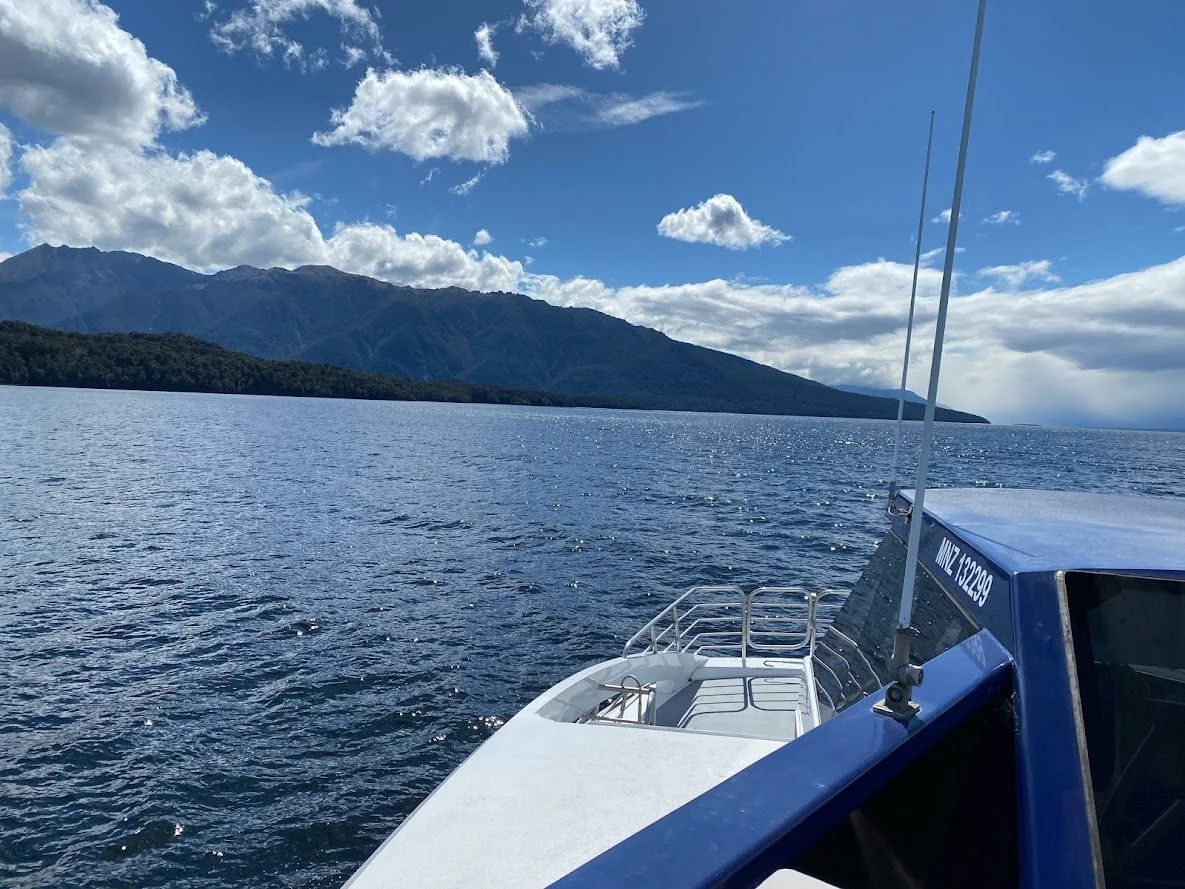
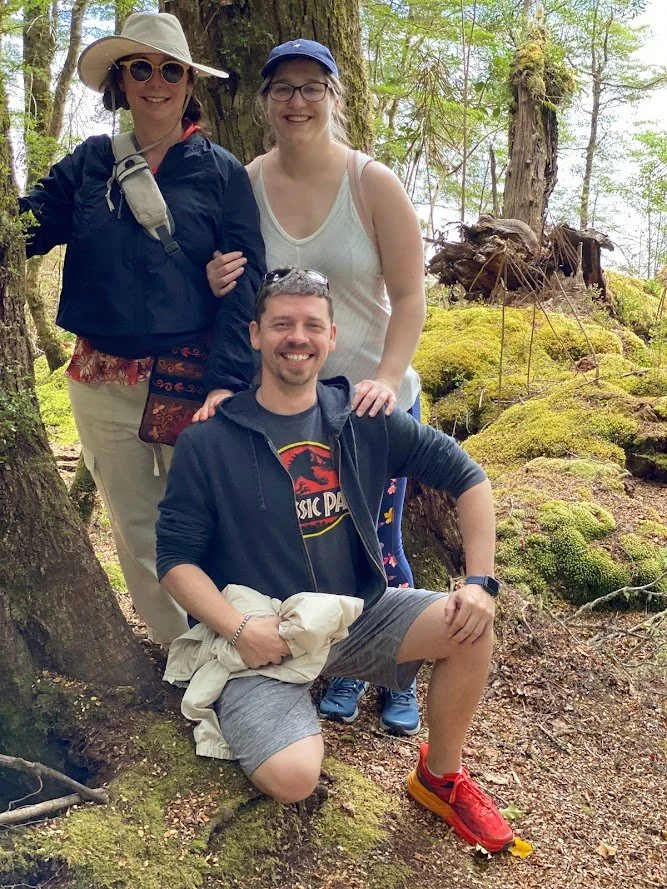
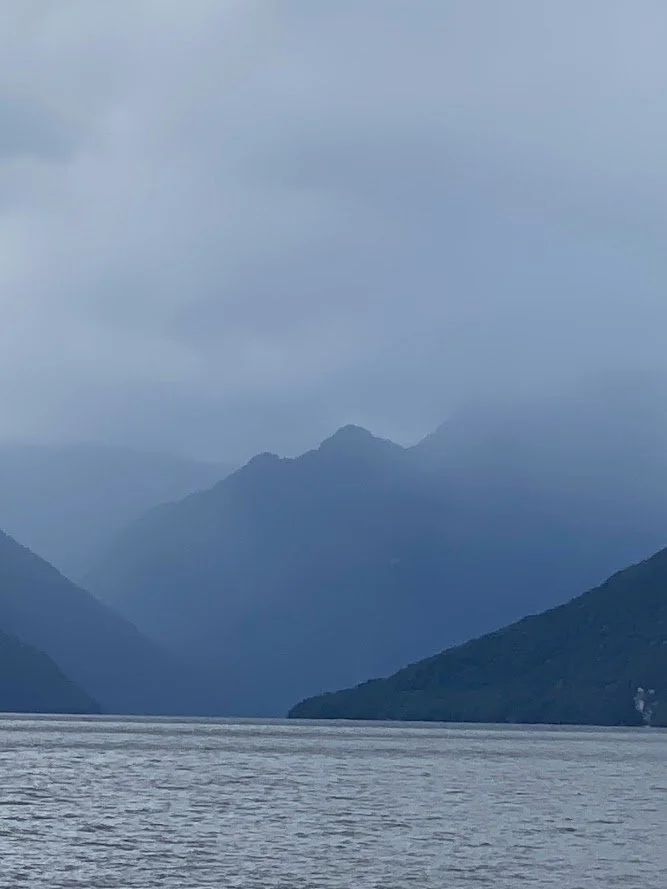
The journey itself was meditative — the lake framed by mountains, the air cool and quiet. Inside the caves, we moved through darkness until the ceiling above us shimmered to life.
Thousands of tiny glowworms lit the cave like a living constellation — soft blue points of light reflected in the water below. It felt otherworldly, like floating beneath a private night sky.
No photos. No noise. Just silence, darkness, and wonder.
Life at Nature’s Pace
In Fiordland, nature sets the rules.
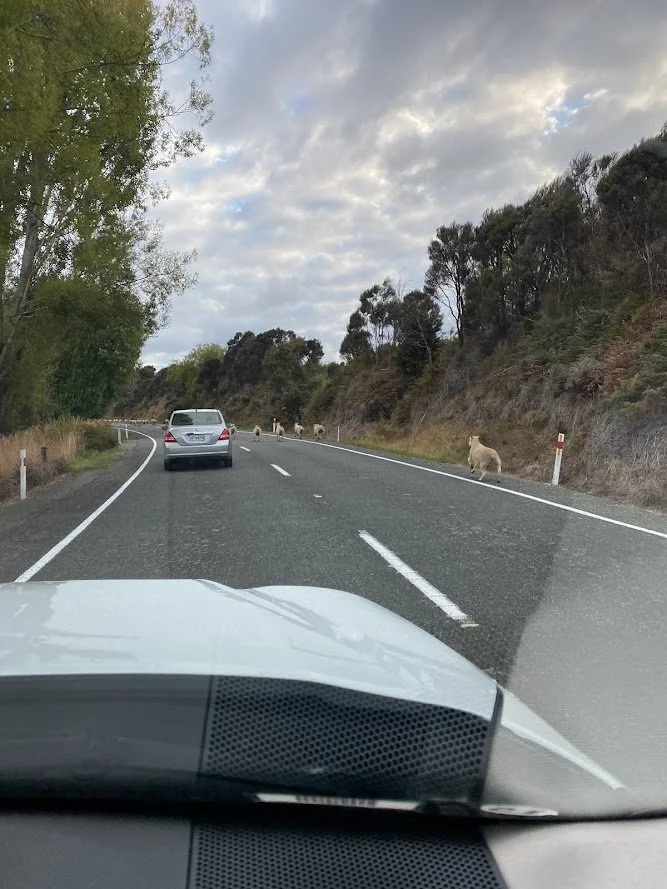
We shared narrow roads with wandering sheep, slowed for flocks crossing without urgency, and accepted that schedules bend here. This is a place that doesn’t care if you’re late — and teaches you not to either.
Every drive felt like a reminder: you are a visitor here.
Milford Sound: The Long Road & the Greatest Reward
The highlight of this chapter — and one of the most powerful moments of the entire New Zealand journey — was the road trip to Milford Sound.
The drive itself is legendary. Waterfalls spill from sheer cliffs. Mountains rise straight from the road. Rain clouds move quickly, sometimes revealing peaks, sometimes swallowing them entirely. It’s dramatic, cinematic, and humbling at every turn.
And then, suddenly, you arrive.
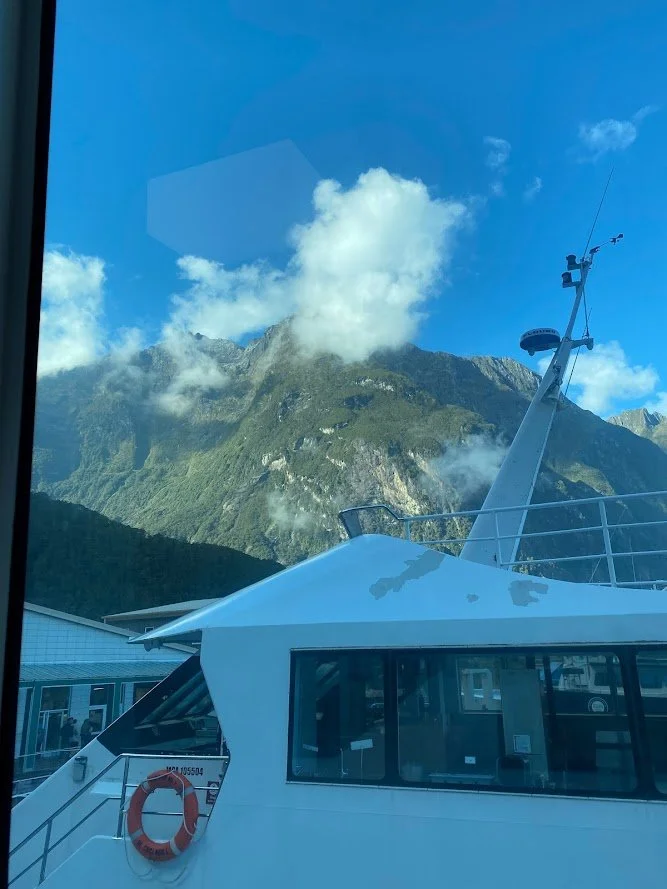
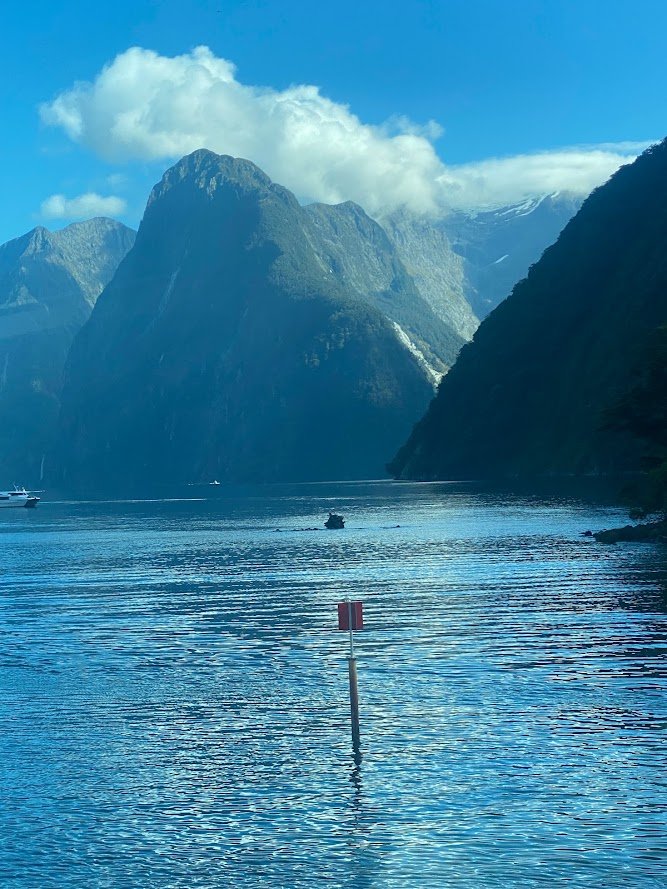
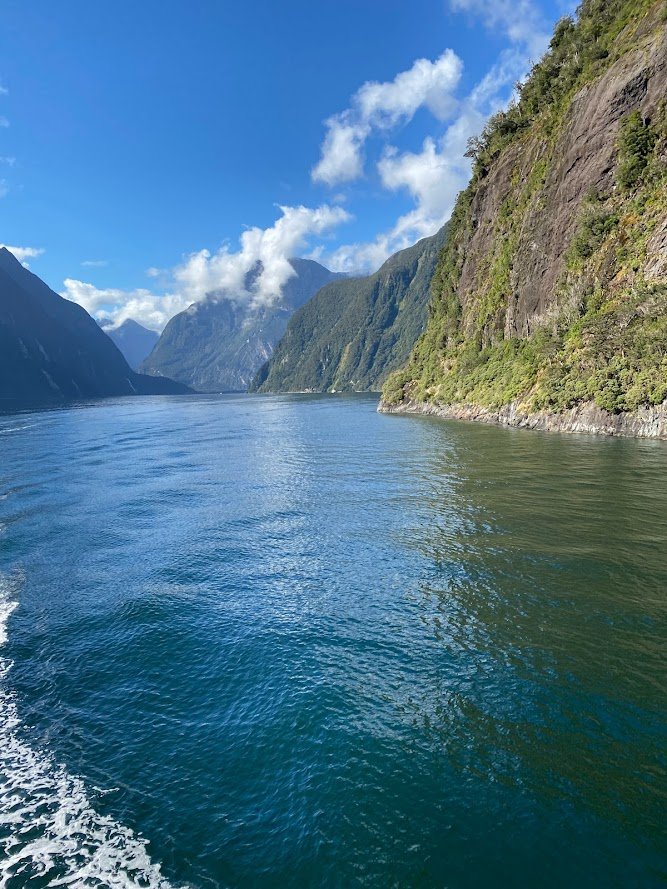
Milford Sound is not subtle. Steep black cliffs plunge straight into dark water. Waterfalls ribbon down rock faces hundreds of feet high. Mist hangs low, softening everything, making the landscape feel ancient and alive.
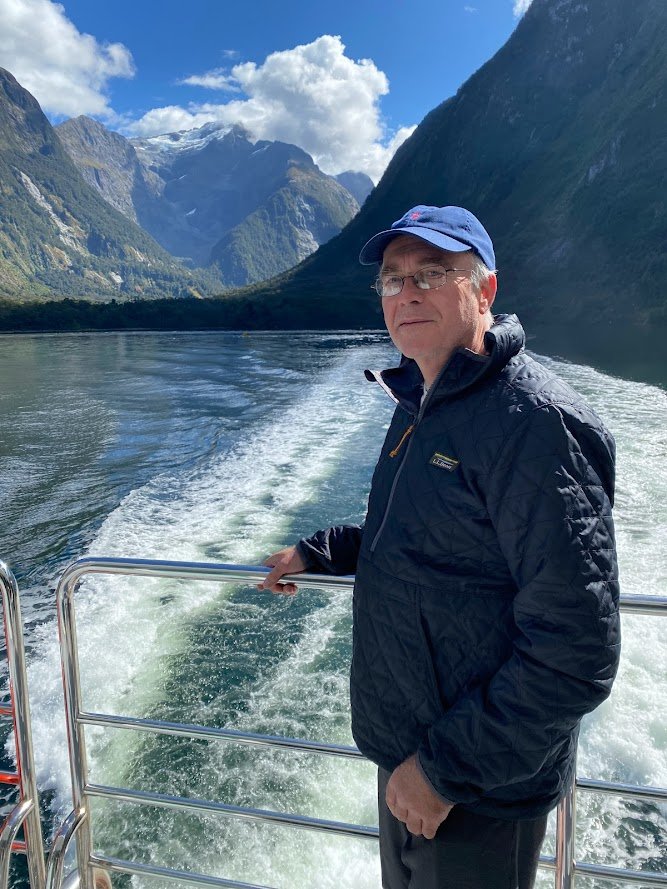
We boarded a boat and drifted quietly through the fjord, dwarfed by the scale of it all. The rain — which many would see as a drawback — only amplified the experience, feeding waterfalls and deepening the mood.
It was breathtaking.
It was solemn.
It was unforgettable.
✨ Reflection
Te Anau and Fiordland stripped travel down to its essentials: weather, water, road, light.
This wasn’t a place of luxury or comfort. It was a place of presence.
Of slowing down.
Of yielding to the land.
Of realizing how small we are — and how lucky.
If Queenstown was the thrill, Te Anau was the quiet knowing that stays with you long after the journey ends.
